%20(1).png)
MYUNGSHIN LEE & LOW CLASSIC The Quiet Revolution of Korean Fashion
- 4 jun
- 5 min de lectura
In an industry increasingly dominated by spectacle, viral moments and logo-driven luxury, Myungshin Lee built something far more difficult: a brand that whispers rather than shouts.
For more than fifteen years, LOW CLASSIC has been one of Korean fashion's most influential success stories, not because it embraced the hyper-commercial side of K-fashion, but because it deliberately moved in the opposite direction. While many international observers associate Korean fashion with idol culture, streetwear, oversized silhouettes and trend cycles accelerated by social media, LOW CLASSIC became known for precision tailoring, architectural simplicity and a distinctly intellectual vision of femininity.
Today, LOW CLASSIC occupies a fascinating position within the global fashion landscape. It is simultaneously one of Seoul's most respected designer labels and one of fashion's best-kept secrets outside Asia, a brand beloved by editors, stylists, buyers and celebrities who value craftsmanship over noise.
Its story is also the story of modern Korean fashion itself.
BEFORE LOW CLASSIC:
The Seoul That Fashion Forgot
To understand why LOW CLASSIC became important, one must first understand the Korean fashion industry of the late 2000s.
When Myungshin Lee and her future partners were studying fashion, Korean designer brands faced a challenge that younger generations often forget. Seoul had a thriving retail market, but relatively few contemporary designer labels capable of competing internationally. Luxury consumers gravitated toward European houses, while domestic fashion was often divided between fast-moving commercial brands and streetwear.
Lee, together with Hwang Hyun-ji and Park Jin-seon, believed there was space for something different.
The three met while studying at Konkuk University. Their backgrounds complemented one another perfectly. Lee focused heavily on design and tailoring, Hwang specialized in merchandising and product development, while Park brought visual storytelling expertise that would later shape the brand's campaigns and visual identity.
Instead of attempting to create another trend-driven label, they imagined a modern wardrobe built around longevity.
The result was LOW CLASSIC.
Founded in 2009, the brand's mission was deceptively simple: create clothing that felt contemporary yet timeless, sophisticated yet wearable, minimalist yet emotional.
WHAT DOES "LOW CLASSIC" ACTUALLY MEAN?
The name itself reveals the philosophy.
For Myungshin Lee, "classic" was never about reproducing the past. It was about creating garments that could evolve with time.
As Lee later explained, a classic can be warm or cool, feminine or masculine, emotional or minimal. The goal was never strict minimalism but balance.
This idea became the foundation of every collection.
LOW CLASSIC garments rarely rely on obvious branding.
Instead, recognition comes through:
Architectural tailoring
Elongated silhouettes
Utilitarian influences
Precise construction
Neutral palettes
Unexpected structural details
Subtle asymmetry
Elevated everyday dressing
The philosophy anticipated what would eventually become known as "quiet luxury" years before the term dominated fashion discourse.
THE SIGNATURE LOW CLASSIC WOMAN
Unlike many brands, LOW CLASSIC never built a fantasy character.
The LOW CLASSIC woman feels real.
Myungshin Lee frequently described her as independent, self-directed and uninterested in dressing for approval. She is not necessarily chasing trends. She dresses for herself.
This mindset explains why LOW CLASSIC became particularly popular among creative professionals, editors, architects, designers and women seeking sophistication without overt luxury branding.
The clothes rarely overwhelm the wearer.
Instead, they amplify her.
THE COLLECTION THAT CHANGED EVERYTHING:
SPRING/SUMMER 2018
If there is one collection that encapsulates Myungshin Lee's talent, it is arguably Spring/Summer 2018.
After a two-year absence from Seoul Fashion Week, LOW CLASSIC returned with a show inspired by the concept of the "Asian Traveler." The idea emerged after Lee spent time in Europe and became fascinated by seeing Asian culture reflected within a Western context.
The runway was deliberately understated.
Wooden flooring.
White fabric panels.
Natural movement.
No excessive theatrics.
The clothes spoke instead.
Silk tunics floated alongside loose white trousers. Draped black fabrics referenced traditional carrying cloths. Folk-inspired prints incorporated mountains, goblins and Korean paper fans. Mandarin-button tops appeared softly stained as though steeped in tea.
Perhaps most remarkable were the accessories.
Lee created leather bags inspired by traditional Korean earthenware water jars.
The bags appeared suspended from single straps, mimicking the act of carrying water through a landscape. It was a beautiful example of how Korean cultural references could be incorporated without becoming costume.
Many critics still consider this one of the strongest expressions of LOW CLASSIC's identity.
THE GEORGIA O'KEEFFE COLLECTION:
FALL/WINTER 2018
While many designers seek inspiration from fashion history, Myungshin Lee often looked toward art.
Her Fall/Winter 2018 collection paid tribute to Georgia O'Keeffe and her years in New Mexico.
The collection featured:
Chocolate knife-pleated skirts.
Dusty rose trench coats.
Beige wool-cashmere capes.
Earth-toned tailoring.
Burnt orange textures.
Hand-knit sweaters woven with silk ribbons.
Transparent bags filled with sand, dirt and branches.
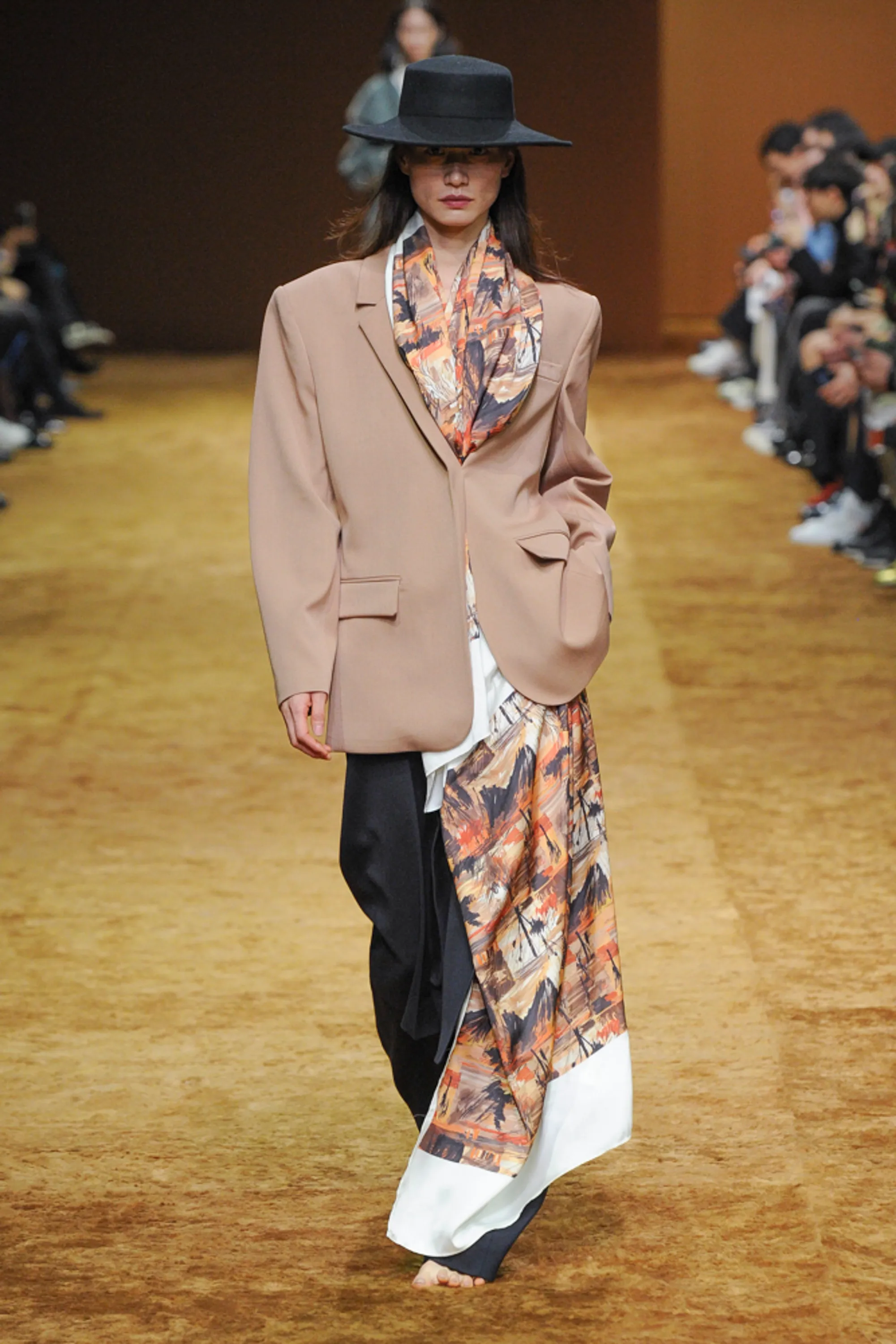
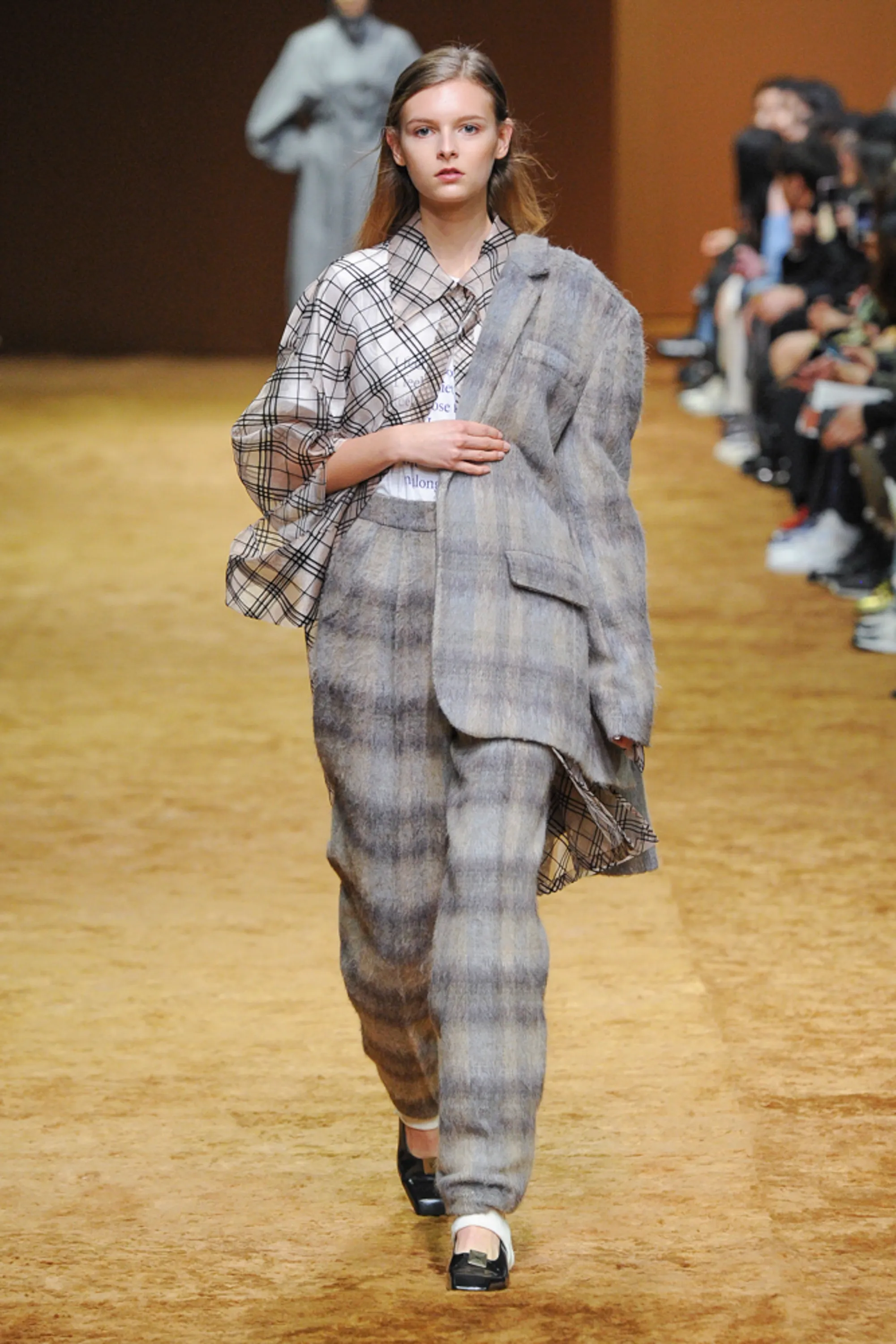
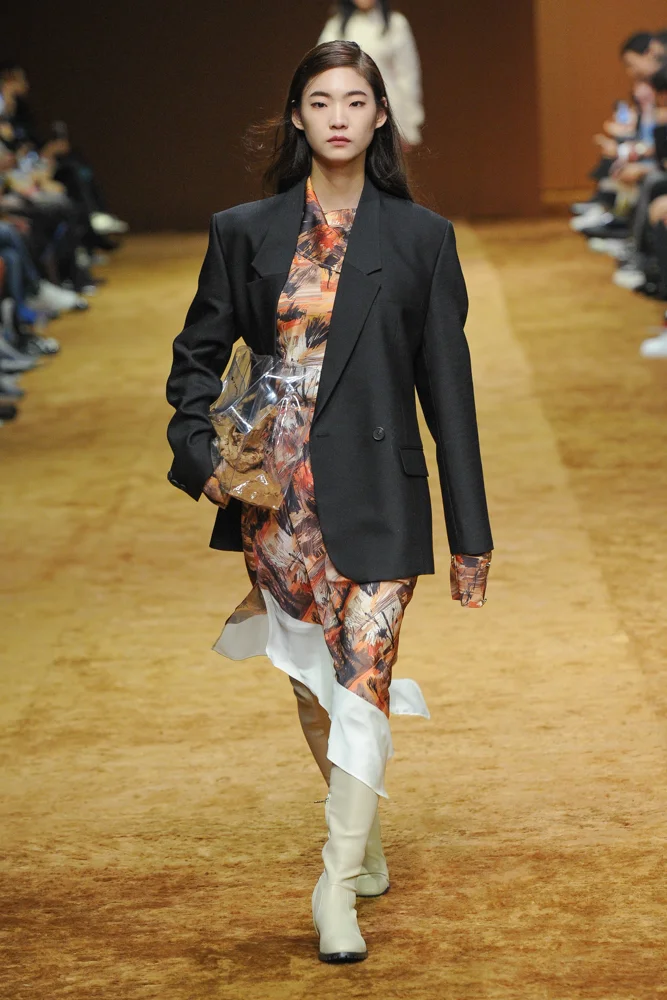


The references extended beyond color.
O'Keeffe's fascination with the desert landscape translated into fluid silhouettes, natural materials and a sense of quiet independence.
Rather than reproducing artwork literally, Lee translated mood into clothing.
That distinction separates good designers from great ones.
WHY EDITORS FELL IN LOVE WITH LOW CLASSIC
Fashion editors have always had a particular affection for LOW CLASSIC.
The reason is surprisingly simple.
The clothes work.
Not only on runways.
Not only in editorials.
In real life.
The brand became known for creating pieces that seamlessly integrated into existing wardrobes.
At a time when fashion increasingly rewarded novelty, LOW CLASSIC rewarded longevity.
THE CELEBRITIES WHO WEAR LOW CLASSIC
Unlike luxury houses that depend heavily on ambassador programs, LOW CLASSIC grew organically.
Many Korean celebrities became genuine customers before formal partnerships ever entered the conversation.
Among the most frequently associated names are:
Krystal Jung
Former f(x) member Krystal became one of the most visible supporters of the brand. Her personal style, minimal, refined and effortless, perfectly mirrors LOW CLASSIC's aesthetic. She has frequently been associated with the brand and was known to visit its Seoul stores.
HyunA
While often associated with bolder fashion choices, HyunA has also been connected to LOW CLASSIC's retail spaces and collections, demonstrating the label's versatility.
Korean Actresses and Creative Professionals
The brand became particularly popular among actresses, stylists and editors seeking clothing that projected sophistication rather than celebrity spectacle. This helped establish LOW CLASSIC as an insider label rather than a mass-market phenomenon.
PARIS FASHION WEEK:
THE INTERNATIONAL BREAKTHROUGH
For years, LOW CLASSIC was one of Seoul's most respected labels.
Then came Paris.
The brand's Spring/Summer 2024 presentation marked its Paris Fashion Week debut, introducing a broader international audience to Myungshin Lee's vision. Critics praised the balance between practicality and experimentation, noting the brand's ability to create clothing that felt both contemporary and timeless.
It was not a dramatic reinvention.
It was a natural evolution.
Which, in many ways, is the most LOW CLASSIC approach possible.
THE BUSINESS OF QUIET LUXURY BEFORE QUIET LUXURY
Fashion loves trends.
The irony is that LOW CLASSIC anticipated one of the biggest trends of the 2020s long before it became fashionable.
Years before social media became obsessed with "stealth wealth" and "quiet luxury," LOW CLASSIC was already producing elegant, logo-free clothing focused on quality, fit and craftsmanship.
The brand never needed to pivot.
The industry simply caught up.
LEGACY
The history of Korean fashion is often told through global superstars, luxury ambassadors and viral cultural moments.
LOW CLASSIC represents another story.
A quieter one.
About creating clothes that remain relevant years after they first appeared on a runway.
Myungshin Lee may never generate the headlines of a Demna, a Marc Jacobs or a Kim Jones.
But her influence can be seen throughout contemporary Korean fashion, particularly among the new generation of designers embracing sophistication, restraint and intellectual design.
In an age obsessed with being noticed, LOW CLASSIC proved that sometimes the most powerful statement is made softly.
All images featured in this article are credited to owners . They are used for editorial and illustrative purposes only, with no commercial intent. All rights remain with their respective owners.