%20(1).png)
Ann Demeulemeester: The Quiet Architecture of Romantic Rebellion
- hace 20 horas
- 3 min de lectura
Ann Demeulemeester occupies a rare space in fashion history. Her work does not rely on spectacle or immediacy, but on atmosphere. It builds slowly, like a poem that reveals its meaning only after the final line has been read. In a system that often rewards visibility over depth, her universe has always moved in the opposite direction.
To understand her impact, it is less useful to think in terms of collections and seasons and more appropriate to think in terms of mood. Her clothes were never just garments; they functioned as extensions of a sensibility shaped by literature, music and a deeply introspective approach to design. Black became one of her most recognizable tools, but never as a statement of darkness in the conventional sense. Instead, it operated as space, allowing silhouette, texture and movement to define the narrative.
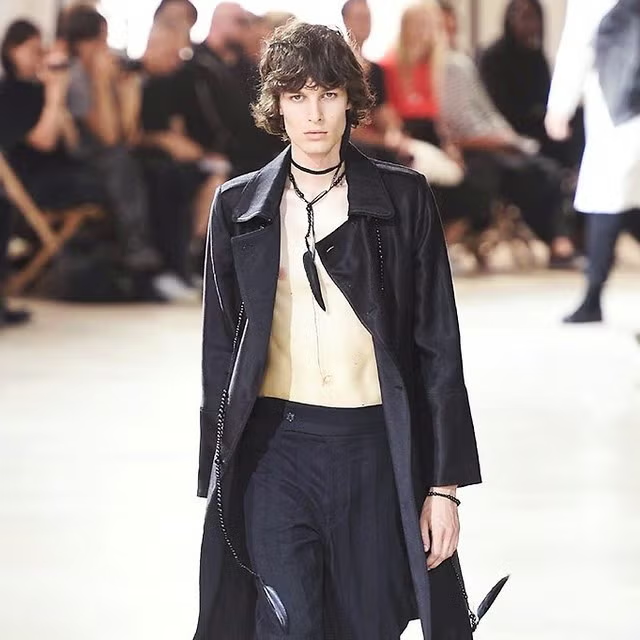



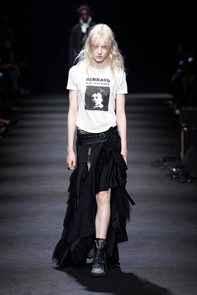
Her origins in Antwerp are essential to understanding this language. The Royal Academy of Fine Arts became, in the early 1980s, a site of quiet transformation, producing a generation of designers who would later reshape the global perception of Belgian fashion. Among them, Ann Demeulemeester stood apart not through confrontation, but through restraint. While her contemporaries explored provocation, print or deconstruction in more explicit forms, she developed a vocabulary that felt intimate and reflective, closer to literature than to the traditional codes of fashion design.
The influence of poetry is present throughout her work, not as reference but as structure. Writers such as Arthur Rimbaud were part of her creative atmosphere, shaping an understanding of clothing as something that could hold emotion rather than simply express identity. This sensibility translated into silhouettes that resisted rigidity. Garments moved with the body rather than defining it, creating a sense of ease that felt almost private, as if the wearer were participating in a personal dialogue rather than a public display.


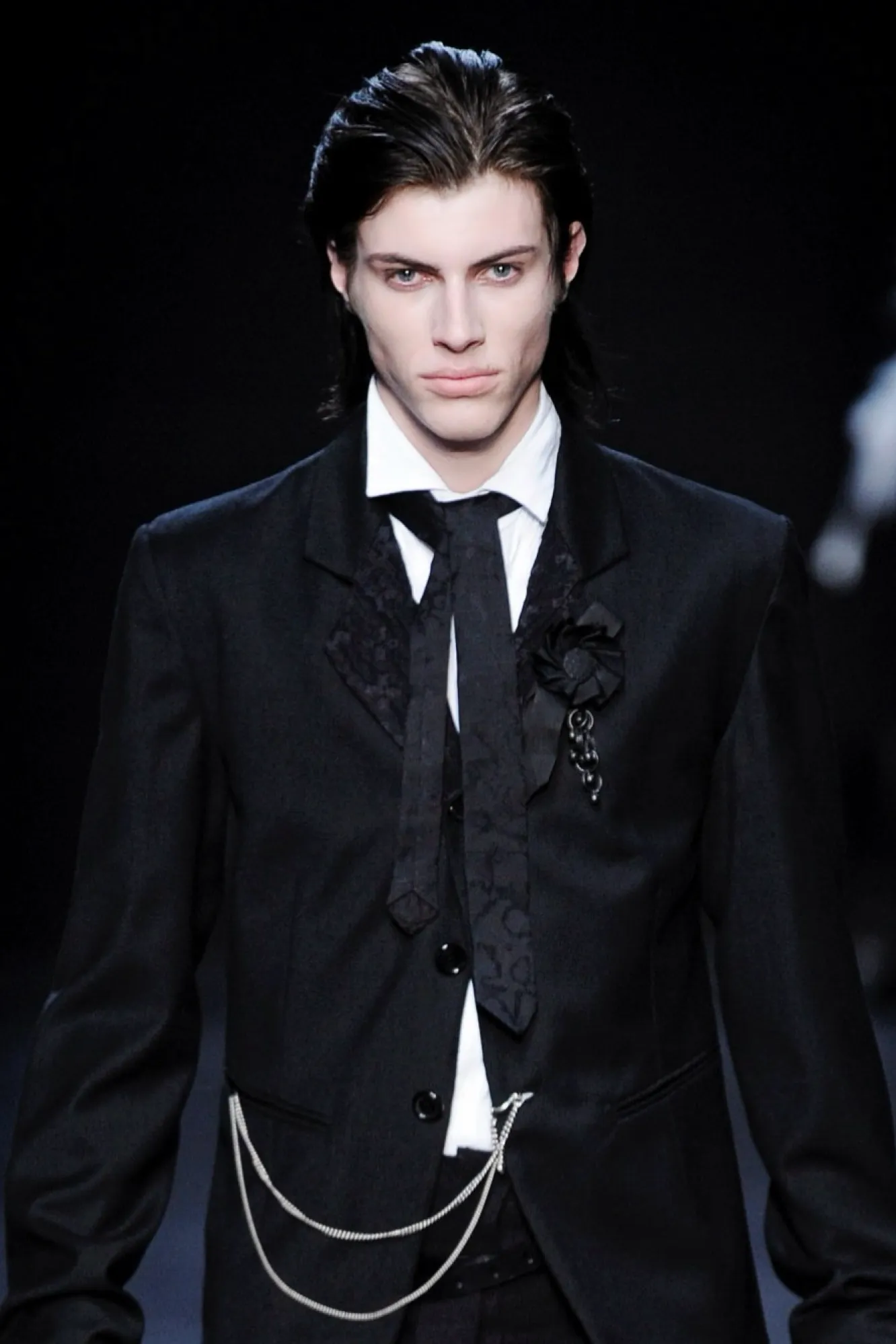


Music played a similarly important role, particularly the enduring connection with Patti Smith. Their relationship is often cited in fashion discourse, yet its significance goes beyond influence in the conventional sense. Smith did not simply inspire a look; she embodied an attitude that resonated deeply with Demeulemeester’s vision. The shared emphasis on independence, artistic integrity and emotional honesty created a dialogue that blurred the boundary between muse and collaborator. Within this exchange, clothing became a medium for expressing a shared worldview rather than a seasonal proposition.
What emerges across Demeulemeester’s body of work is a consistent tension between structure and fragility. Tailoring appears precise but never rigid. Fabrics suggest movement even when static. There is a recurring sense that nothing is fixed, that everything exists in a state of quiet transition. This ambiguity is central to her aesthetic language. It allows the garments to avoid categorization, existing instead in a space where masculine and feminine references coexist without hierarchy.
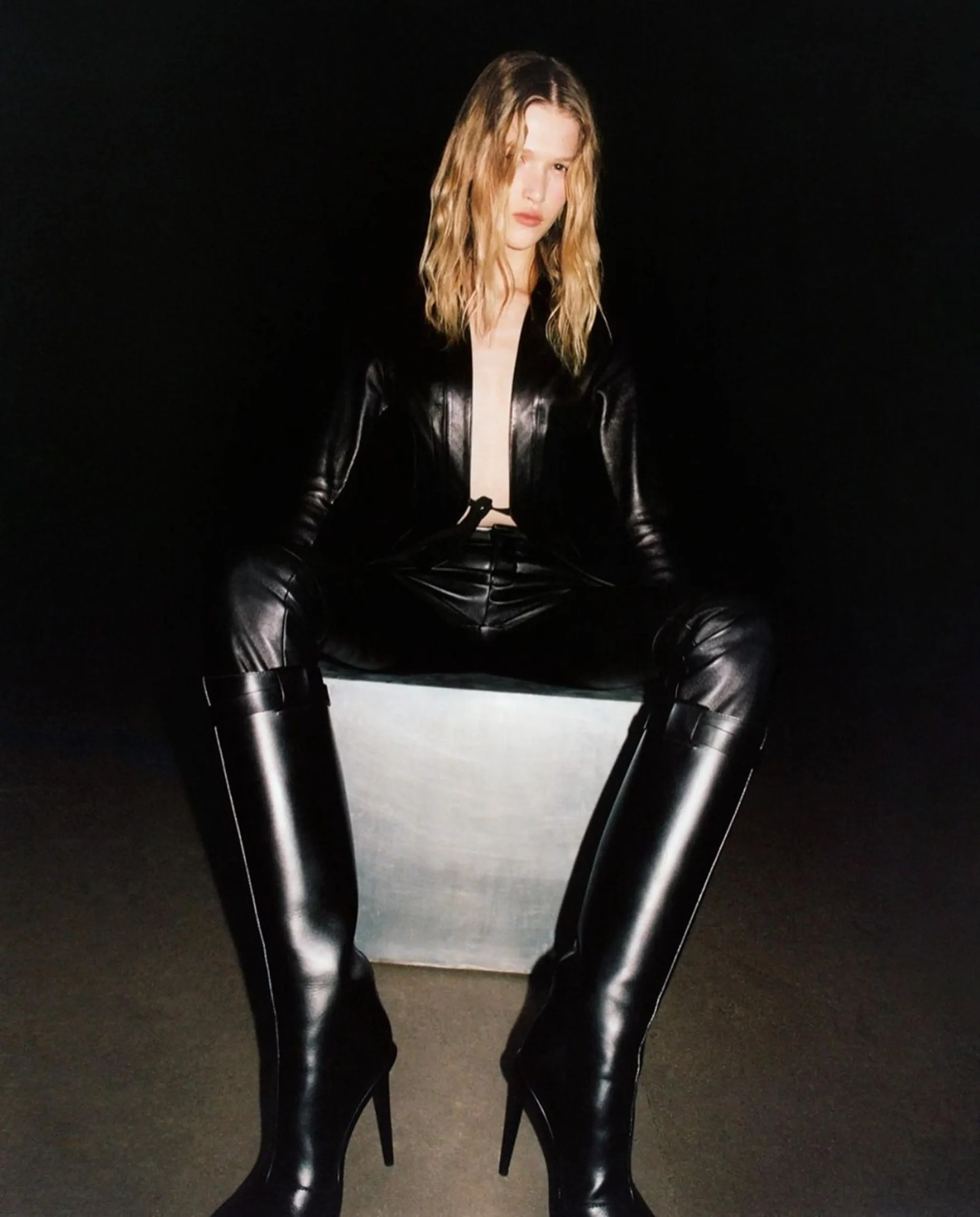
The brand’s visual identity reinforced this philosophy. Photography, often developed in close collaboration with Patrick Robyn, extended the emotional tone of the collections. Images did not function as documentation but as continuation, building a world in which clothing, light and environment were inseparable. This coherence between design and presentation contributed to the sense that Ann Demeulemeester was never simply producing fashion, but constructing a complete visual and emotional ecosystem.
Even as the pace of the industry has accelerated and the language of fashion has become increasingly driven by immediacy, her work retains a different kind of relevance. It resists the logic of constant novelty, instead offering something slower and more enduring. Contemporary designers continue to reference the balance she achieved between darkness and softness, between structure and dissolution, but few manage to replicate the quiet confidence that defined her approach.
Ann Demeulemeester’s legacy is not defined by trends or singular iconic pieces. It is defined by atmosphere, by the creation of a world that remains recognizable even in fragments. Her contribution to fashion lies in proving that clothing can function as a form of language that does not need to be loud in order to be understood. In her work, silence is not absence but intention, and restraint becomes a form of clarity.
In that sense, her relevance has only deepened with time. As fashion continues to oscillate between speed and spectacle, her body of work stands as a reminder that coherence, emotion and subtlety remain powerful forces. She did not design to capture attention in a moment; she designed to construct meaning over time.
And that is precisely why her influence continues to persist, not as nostalgia, but as a living reference point for designers who understand that fashion, at its most profound, is not about what is seen immediately, but about what continues to resonate long after it has been worn.


