%20(1).png)
REI KAWAKUBO: The Woman Who Reimagined Fashion
- hace 6 días
- 7 min de lectura
Fashion is often described as an industry obsessed with the future. Every season promises something new, every runway introduces a fresh trend and every generation produces designers eager to challenge what came before. Yet very few of those designers genuinely change the course of fashion history.
Rei Kawakubo did.
For more than five decades, the founder of Comme des Garçons has occupied a singular position within the fashion landscape. She is celebrated, studied and admired, yet remains deeply enigmatic. Her collections rarely follow conventional ideas of beauty, her interviews are famously sparse and her work often raises more questions than it answers.
That mystery is precisely what has made her one of the most influential creative figures of the modern era.
While most designers seek to create desirable clothing, Kawakubo has spent her career challenging the very foundations of what fashion is supposed to be. Her work questions ideas of perfection, femininity, luxury and even the relationship between the body and the garments that surround it.
To understand Rei Kawakubo is to understand that fashion can be far more than clothing.
It can be philosophy, It can be rebellion, It can be art.
And sometimes, it can be all three at once.
Growing Up Outside Fashion's Traditional World
Born in Tokyo in 1942, Rei Kawakubo entered a world vastly different from the one she would eventually help reshape. Unlike many of fashion's most celebrated designers, she never attended a prestigious fashion school, nor did she train as a traditional couturier.
Instead, she studied literature and fine arts at Keio University, one of Japan's most respected academic institutions.
This seemingly unrelated educational background would become one of her greatest strengths.
Because Kawakubo did not learn fashion through established methods, she never felt constrained by them. She approached clothing with the curiosity of someone looking from the outside in. Rather than asking how garments should be made, she questioned why they were made that way in the first place.
It was an approach that would define her entire career.
By the late 1960s she began designing clothing for herself after struggling to find pieces that reflected her own tastes. What started as a personal pursuit gradually evolved into a business, and in 1969 she launched what would eventually become Comme des Garçons.
The name itself was intriguing. Borrowed from a French phrase meaning "like boys," it hinted at themes that would repeatedly appear throughout her work: gender ambiguity, independence and a rejection of traditional expectations.
Even before the world knew her name, Rei Kawakubo was already challenging conventions.
The Arrival of Comme des Garçons
During the 1970s, Comme des Garçons became increasingly influential within Japan. At a time when much of fashion still celebrated glamour, sensuality and conventional beauty, Kawakubo offered an alternative vision.
Her designs embraced asymmetry.
They explored volume.
They often avoided bright colours.
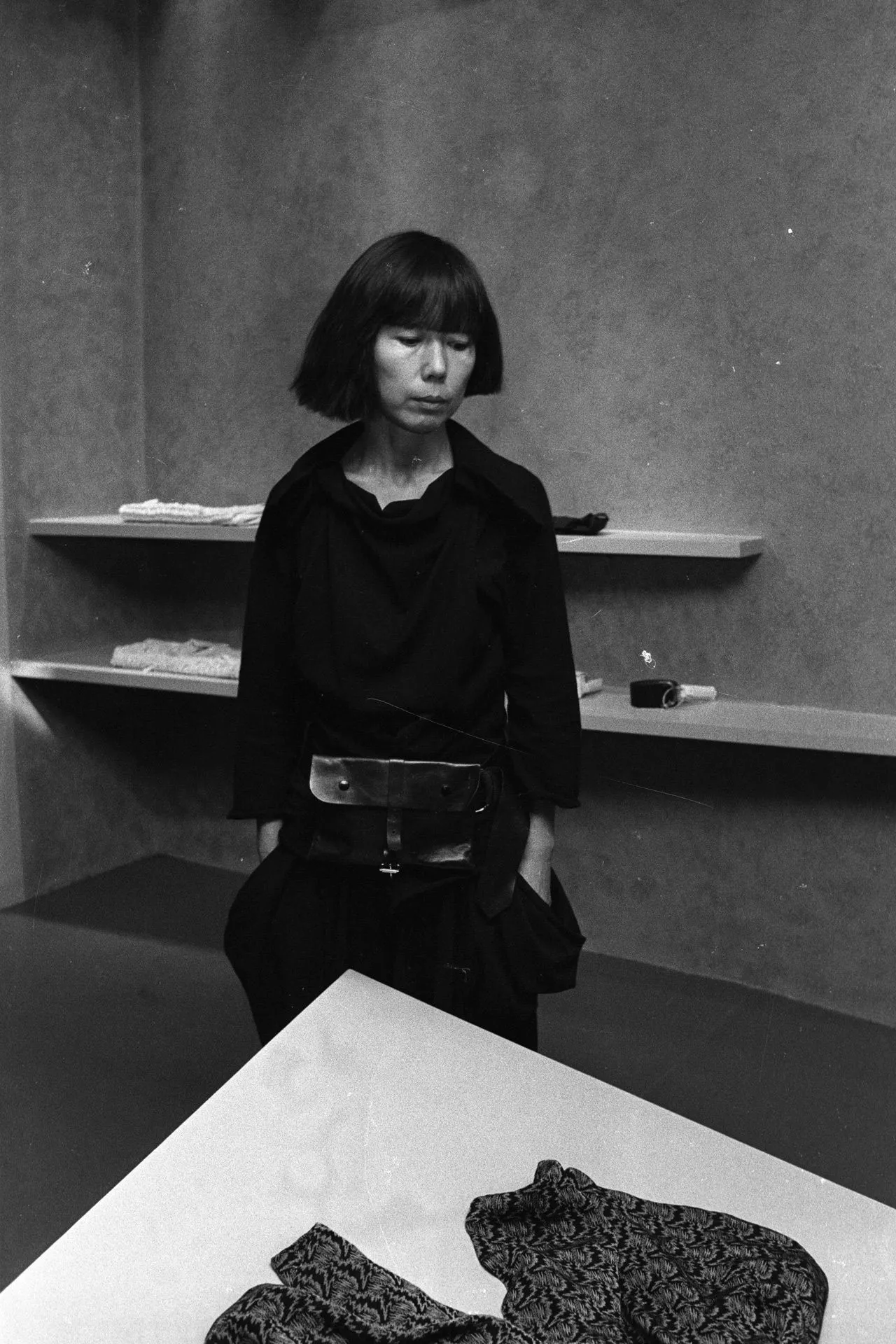


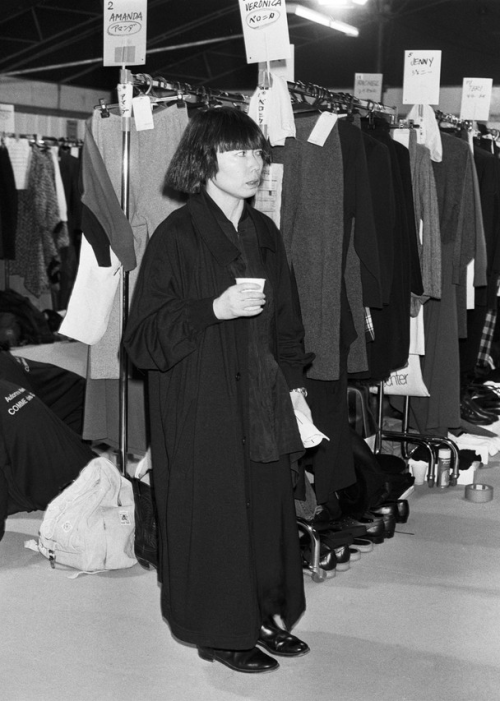
Most importantly, they refused to define women through traditional notions of attractiveness.
This perspective felt radical.
Fashion had long been associated with enhancement and adornment. Kawakubo proposed something entirely different. Her clothing did not seek approval. It encouraged individuality.
By the end of the decade, her influence within Japan had grown considerably. The next step was inevitable.
Paris. The city that had long defined global fashion. The city she was about to shock.
Paris, 1981 and the Collection That Changed Everything
When Comme des Garçons debuted in Paris in 1981, the reaction was immediate and deeply divided.
Fashion editors accustomed to polished luxury and traditional elegance encountered something entirely unfamiliar. Models appeared in oversized silhouettes, distressed fabrics, unfinished edges and layers of black that seemed to reject every established rule of European fashion.
To some critics, the collection looked unfinished.
To others, it felt almost apocalyptic.
The now infamous term "Hiroshima Chic" emerged during discussions surrounding the collection, reflecting both the discomfort and fascination it provoked.
Yet what many critics initially dismissed would soon prove transformative.
Looking back, it is difficult to overstate the significance of that moment. The fashion world had spent decades pursuing glamour and perfection. Kawakubo arrived with an entirely different proposition: perhaps beauty could exist in imperfection. Perhaps asymmetry could be elegant. Perhaps clothing did not need to flatter the body in order to be meaningful.
The shockwaves of that collection continue to resonate today.
Many of the ideas that dominate contemporary fashion, oversized tailoring, deconstruction, monochromatic dressing and conceptual design, owe something to the path Kawakubo helped create.
The Japanese Revolution
Rei Kawakubo's arrival in Paris did not happen in isolation.
Alongside contemporaries such as Yohji Yamamoto and Issey Miyake, she became part of a broader movement that fundamentally altered Western perceptions of fashion.
Together, these designers introduced a distinctly Japanese approach to design, one that often prioritized silhouette, concept and craftsmanship over conventional glamour.
The contrast with European fashion was striking.
While Parisian luxury houses frequently celebrated opulence and refinement, Japanese designers explored absence, restraint and experimentation. They challenged assumptions that had remained largely unquestioned for decades.


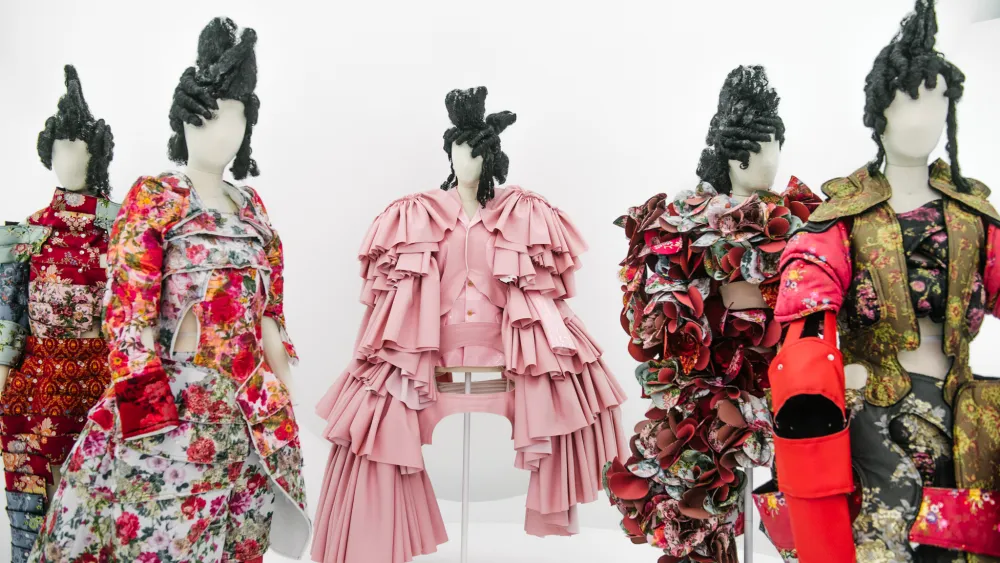
For young designers watching from the sidelines, the impact was enormous.
Suddenly, fashion felt bigger.
More intellectual.
Challenging Beauty Itself
Perhaps the most remarkable aspect of Rei Kawakubo's career is her willingness to challenge ideas that most designers simply accept.
Beauty is one of those ideas.
Throughout fashion history, designers have often sought to enhance the body. Kawakubo repeatedly questioned why that should be the goal.
Her collections frequently distort familiar silhouettes. They introduce unexpected shapes, unusual proportions and structures that appear almost sculptural. Rather than emphasizing the body's natural form, they transform it.
This approach reached one of its most famous expressions in the Spring/Summer 1997 collection known as Body Meets Dress, Dress Meets Body.
Often referred to as the "Lumps and Bumps" collection, it featured padded forms that dramatically altered the silhouette. Bodies appeared unfamiliar. Proportions shifted. Conventional standards of attractiveness seemed irrelevant.
At the time, the collection divided opinion.
Today, it is widely regarded as one of the most influential runway presentations ever created.
What once appeared radical has become a reference point for countless designers who followed.
Fashion as a Medium for Ideas
Many designers tell stories.
Rei Kawakubo asks questions.
That distinction is crucial.
Her collections rarely provide simple narratives or straightforward explanations. Instead, they invite interpretation. Themes such as identity, duality, protection, vulnerability, destruction and rebirth often emerge throughout her work, though rarely in obvious ways.
A Comme des Garçons runway show can feel closer to an art installation than a traditional fashion presentation.
Garments become objects.
Silhouettes become symbols.
The runway becomes a space for exploration.
This intellectual approach has led many observers to describe her work as art. Museums around the world have embraced her creations, scholars have analysed her collections and critics have written extensively about her influence.
Yet Kawakubo herself has consistently resisted attempts to categorise her work as anything other than fashion.
Perhaps that refusal is part of what makes it so compelling.
Building an Empire Without Compromise
What makes Rei Kawakubo particularly remarkable is that she achieved commercial success without abandoning her creative vision.
Many avant-garde designers struggle to balance experimentation with business realities.
Kawakubo managed both.
Over the decades, Comme des Garçons evolved into a vast creative ecosystem encompassing multiple labels, fragrances, collaborations and retail concepts. Each branch explored different ideas while remaining connected to the brand's broader philosophy.


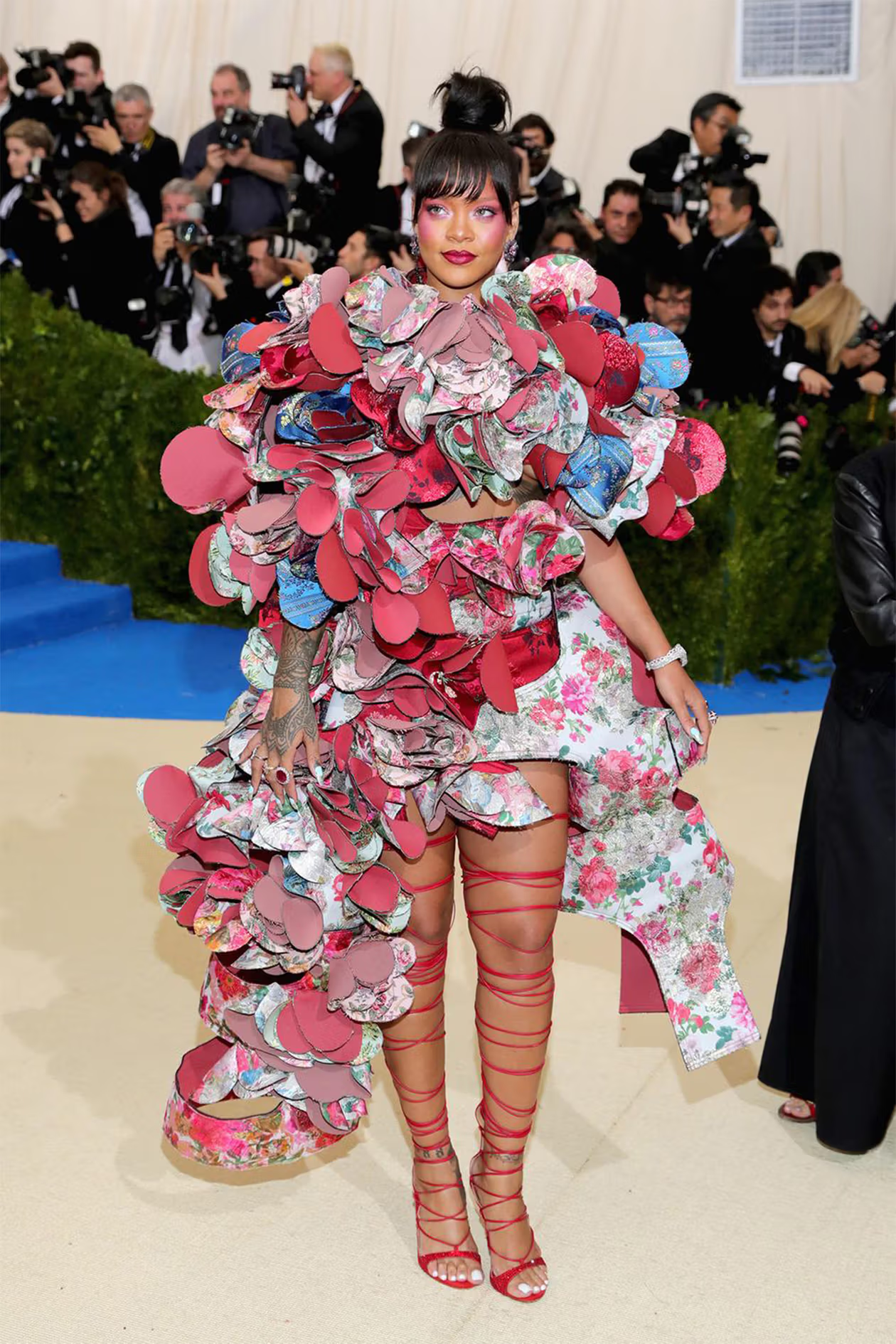
One of the most influential developments came with the creation of Dover Street Market.
More than a store, it became a cultural platform that reimagined luxury retail. Emerging designers appeared alongside established names. Fashion coexisted with art, music and experimentation. Shopping became an experience rather than a transaction.
Today, countless concept stores owe a debt to the model Kawakubo pioneered.
The Designers Who Followed
Influence is often difficult to measure.
In Kawakubo's case, it is impossible to ignore.
Generations of designers have built upon ideas she helped introduce into mainstream fashion. Martin Margiela, Junya Watanabe, Craig Green, Gareth Pugh and countless others have explored concepts that exist, at least in part, because Kawakubo demonstrated their possibilities.
Perhaps even more importantly, she legitimised the idea that fashion could be intellectual.
Before Rei Kawakubo, designers were often expected to create beautiful clothes.
After Rei Kawakubo, they could also create arguments.
Entire worlds of thought expressed through fabric and form.
That shift changed the industry forever.
The Met Gala Recognition
In 2017, the Metropolitan Museum of Art dedicated its Costume Institute exhibition to Rei Kawakubo and Comme des Garçons.
The significance of this decision cannot be overstated.
Prior to Kawakubo, only one living designer had received the same distinction: Yves Saint Laurent.
The exhibition, titled Art of the In-Between, introduced her work to a wider audience while simultaneously confirming her place among the most important creative figures in fashion history.
Visitors encountered garments that blurred boundaries between art and fashion, beauty and discomfort, structure and abstraction.
For longtime admirers, the exhibition served as recognition.
For newcomers, it was an introduction to one of fashion's most extraordinary minds.
The Power of Remaining Mysterious
In an age dominated by social media, personal branding and constant visibility, Rei Kawakubo remains a rarity. She rarely grants interviews or explains her collections.
The focus remains on the work.
This distance has only strengthened her influence.
While many contemporary figures build visibility through personality, Kawakubo has spent decades allowing her creations to speak on her behalf.
The result is a legacy built not on celebrity but on ideas.
Legacy
Fashion history is filled with designers who introduced memorable silhouettes, successful handbags or iconic collections.
By rejecting conventional beauty, embracing experimentation and encouraging audiences to question their assumptions, she transformed clothing into a medium for intellectual and creative exploration.
More than forty years after her Paris debut, the industry continues to grapple with the ideas she introduced.
That may be the clearest measure of her influence.
The greatest designers change what people wear.
The rarest ones change how people see.
Rei Kawakubo did both.
All images featured in this article are credited to owners . They are used for editorial and illustrative purposes only, with no commercial intent. All rights remain with their respective owners.


