%20(1).png)
GIVENCHY: The Anatomy of Modern Elegance
- 21 abr
- 10 min de lectura
In the hushed ateliers of Paris, where threads of history intertwine with the pulse of modernity, Givenchy endures as one of fashion’s most luminous legacies. Founded in 1952 by the aristocratic visionary Hubert de Givenchy, the maison has long embodied a singular alchemy: the marriage of sculptural precision and effortless grace, where every seam whispers of quiet rebellion against the ordinary. Today, under the stewardship of creative director Sarah Burton, appointed in September 2024, the house charts a new chapter, one that honors its founder’s reverence for the feminine form while embracing the complexities of contemporary womanhood. From the silver screen to the global runway, from iconic fragrances to boundary-pushing makeup, Givenchy remains a synonym for unapologetic elegance. This is its story, told not as mere chronology, but as an enduring dialogue between heritage and horizon.
The Founding Vision: Hubert de Givenchy and the Birth of Modern Couture
Hubert James Taffin de Givenchy, born in 1927 into a family of French nobility, arrived in the world of fashion not by destiny but by deliberate choice. Initially drawn to architecture, he pivoted to design, apprenticing under the likes of Jacques Fath and Elsa Schiaparelli before striking out on his own at the tender age of 25. His inaugural collection in 1952 revolutionized the postwar silhouette with “separates” blouses, skirts, and shirting that liberated women from the constraints of matched ensembles. It was a quiet revolution, rooted in practicality yet elevated by couture’s exacting hand.
Yet it was his serendipitous encounter with Audrey Hepburn in 1953 that etched Givenchy into the cultural firmament. Expecting Katharine Hepburn for fittings on the set of *Sabrina*, Givenchy instead met the gamine ingénue who would become his lifelong muse. He dressed her in a strapless white ball gown for that film.

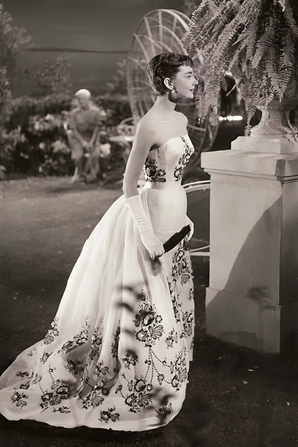


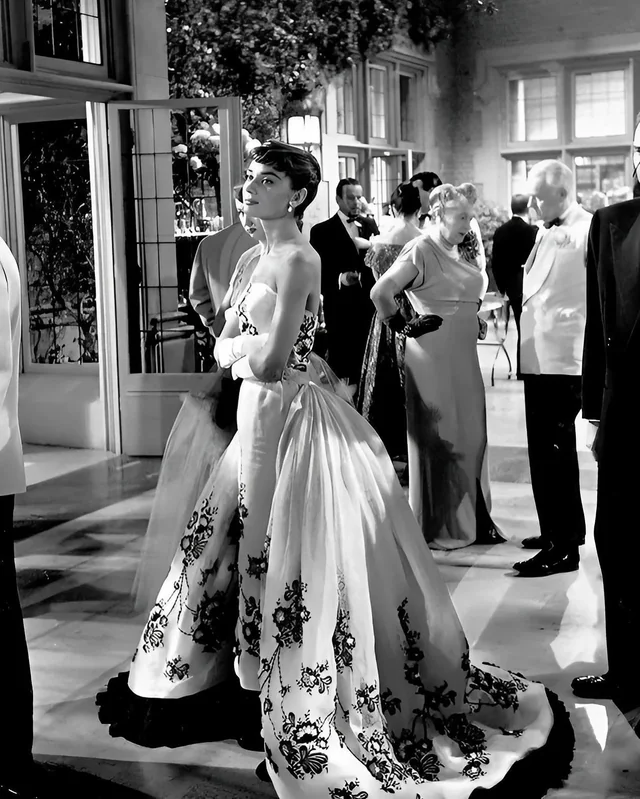
Hepburn was not alone in her devotion. Jackie Kennedy Onassis, Lauren Bacall, Grace Kelly, and Greta Garbo all sought Givenchy’s refined tailoring. His friendship with Cristóbal Balenciaga whom he credited as his greatest teacher, infused the house with a shared obsession for volume, proportion, and the elimination of the superfluous. By the time Hubert retired in 1995, Givenchy had not only dressed the century’s most iconic women but redefined how fashion could feel: architectural yet intimate, luxurious yet wearable.
An Evolution of Visionaries: From Galliano to Burton
The post-Hubert era unfolded as a procession of bold talents, each imprinting their DNA while safeguarding the maison’s DNA of sculptural elegance. John Galliano’s brief 1995–1996 tenure brought theatrical romance and historical reverie, his debut couture collection a triumph of bias-cut drama. Alexander McQueen (1996–2001) injected raw energy and gothic romance, his shows legendary for their emotional intensity and technical bravura. Julien MacDonald’s interlude (2001–2004) favored glamour and embellishment, while Riccardo Tisci’s 12-year reign (2005–2017) catapulted Givenchy into the 21st century with darkly romantic ready-to-wear, celebrity magnetism, and a reimagined haute couture that blended street edge with opulent craft.
Clare Waight Keller (2017–2020), the house’s first female creative director, brought a quiet strength and inclusivity, most memorably designing Meghan Markle’s 2018 wedding gown—a sleek bateau-neck silhouette that fused modernity with royal restraint. Matthew M. Williams (2020–2023) infused a street-luxe sensibility, elevating accessories like the Antigona bag into cultural totems. Then came Sarah Burton in September 2024. Fresh from 13 years helming Alexander McQueen, Burton presented her debut in March 2025, signaling a return to the maison’s foundational codes: precision tailoring, sensual femininity, and an intuitive dialogue with women’s lived realities. “How can we put ourselves back together in the world we’re living in?” she mused backstage after her Fall 2026 show a question that echoes through every collection.
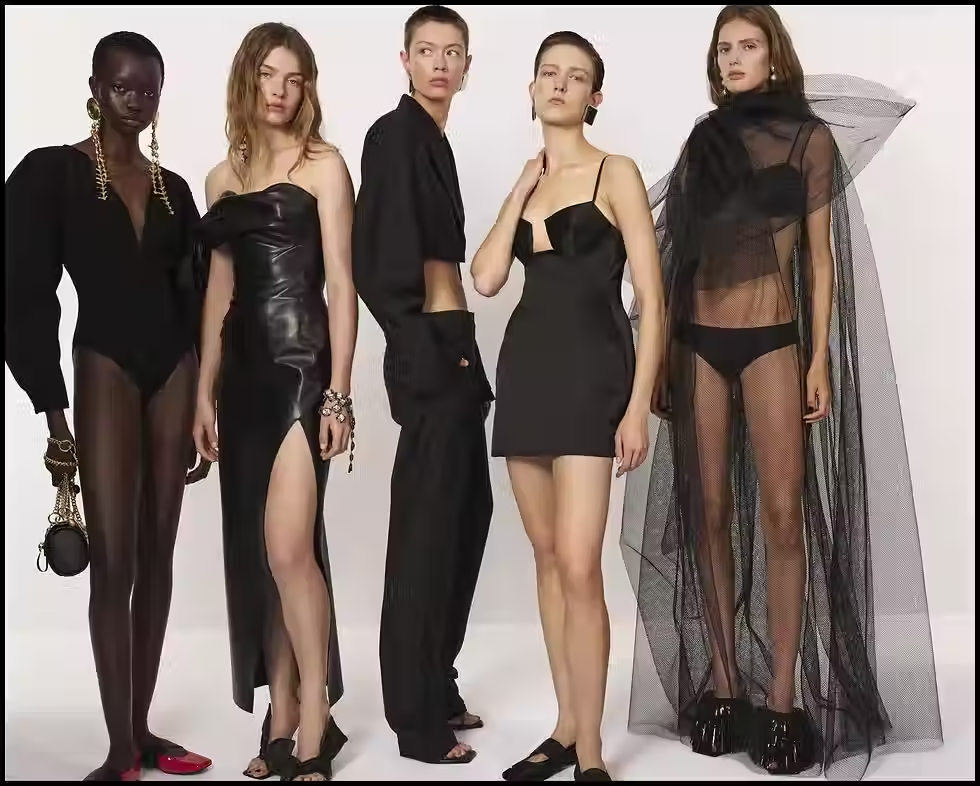
Burton’s runway reveries unfold like living tapestries. Her Spring/Summer 2026 collection explored “powerful femininity” through feminine archetypes—peeling back tailoring to reveal skin, then layering dresses and undresses in a vocabulary of lightness and ease. Fall/Winter 2026 amplified this with a symphony of velvet, animal prints, kimono silks, lace, silver bullion, and wild furry textures. Models glided in jewel-toned painterly florals and Vermeer-inspired headscarves, tailored tuxedos with hourglass cinches, and bias-cut leopard lace softened by ribbon threads. Front rows glittered with Rooney Mara, Vanessa Kirby, Gwendoline Christie, and Elizabeth Olsen, a testament to the house’s magnetic pull. Burton’s women are multifaceted—artists, writers, DJs—dressed not for spectacle, but for the fragmented poetry of daily life.
The Realm of Beauty: Fragrances, Makeup, and Skincare as Couture
Givenchy’s beauty arm, launched with perfumes in the 1950s, extends the maison’s ethos into the intimate realm of self-expression. L’Interdit endures as a cornerstone, its tuberose, jasmine, and patchouli evoking Hepburn’s forbidden allure. The Gentleman line, including Boisée Eau de Parfum, offers woody, sophisticated masculinity, while Very Irrésistible balances pear, rose, and musk in playful femininity.
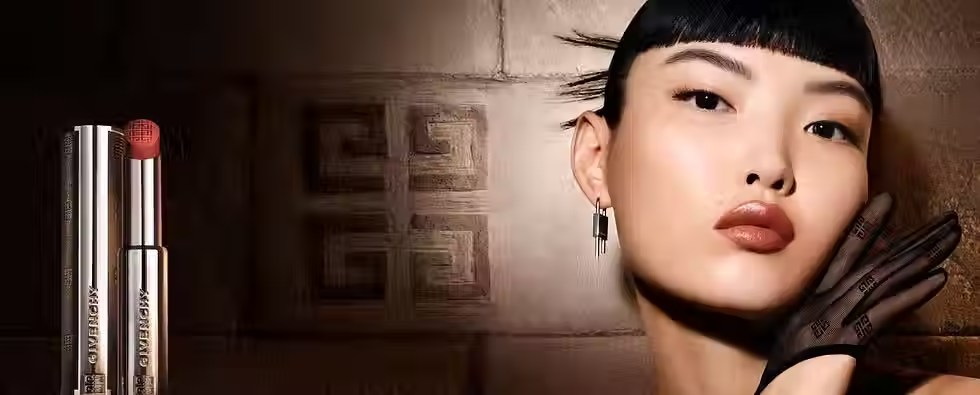
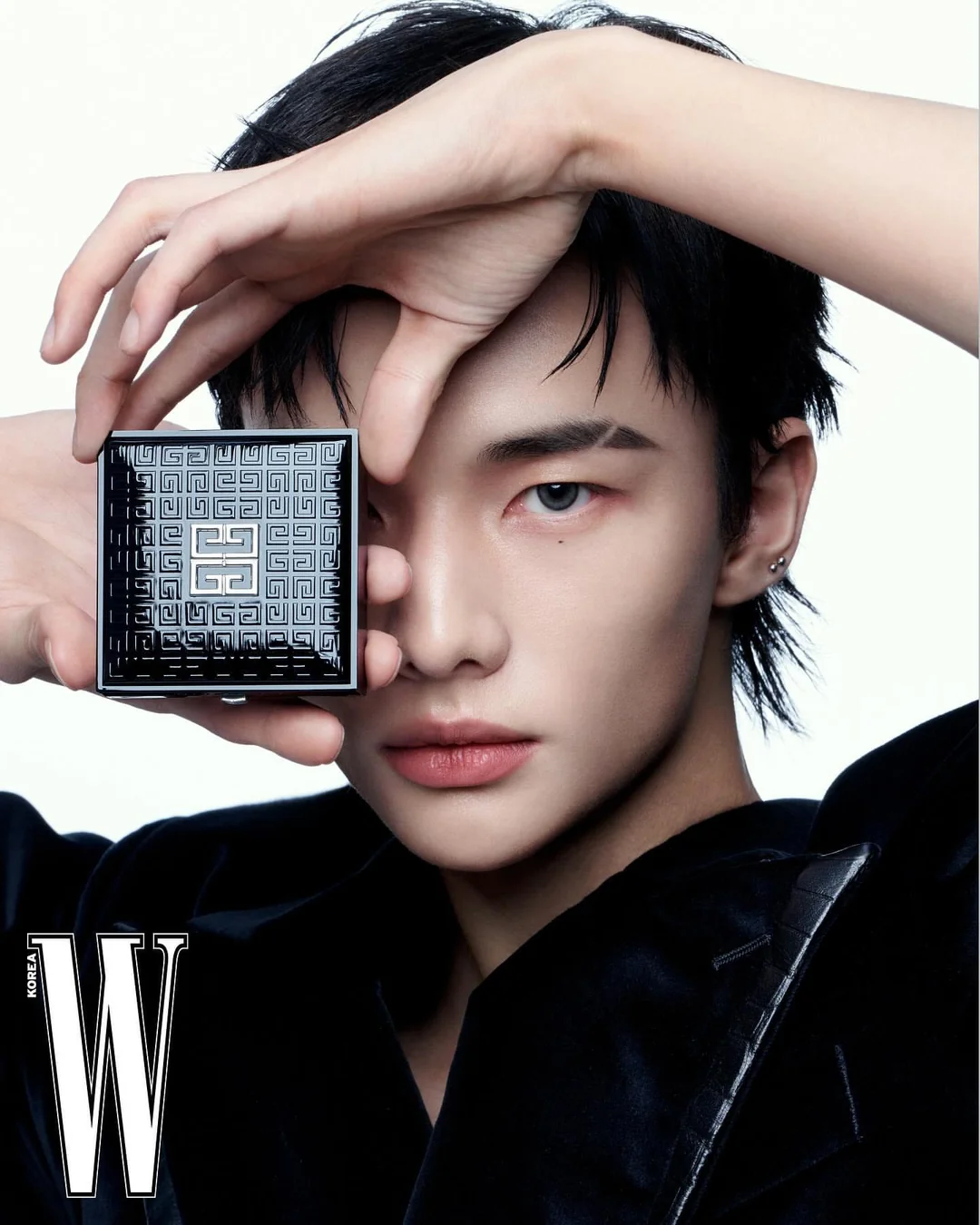
Makeup collections marry couture pigments with modern performance. The Prisme Libre 4-Color Pressed Powder, a blurring, color-correcting icon available in limited couture editions, delivers a flawless, light-reflecting veil. Le Rouge Velvet Matte Lipsticks long-wearing, velvety, and richly pigmented,come in shades from nude rose to bold rose red, housed in sleek, refillable compacts. Skincare emphasizes radiance and resilience, while limited holiday collections layer festive opulence onto these staples. Each product is not merely cosmetic but an extension of the runway: precise, sensual, and designed to enhance the wearer’s inherent confidence.
Ambassadors and Modern Muses: A Global Tapestry
Givenchy’s ambassadors have always mirrored its evolution, from Hepburn’s gamine grace to today’s multifaceted icons. Chinese actress Zhang Ruonan represents the brand in China, while Zhao Liying was named global beauty ambassador in July 2025, fronting campaigns for Le Rouge and embodying a “new era” of bold elegance. Front-row stalwarts like Fan Chengcheng, Nanao, and Yu Shuxin amplify the maison’s reach across Asia and beyond. Yet it is the runway itself peopled by diverse talents and artists, hat remains the ultimate muse.

Hyunjin: The Artistic Soul of Stray Kids as Givenchy Beauty Ambassador
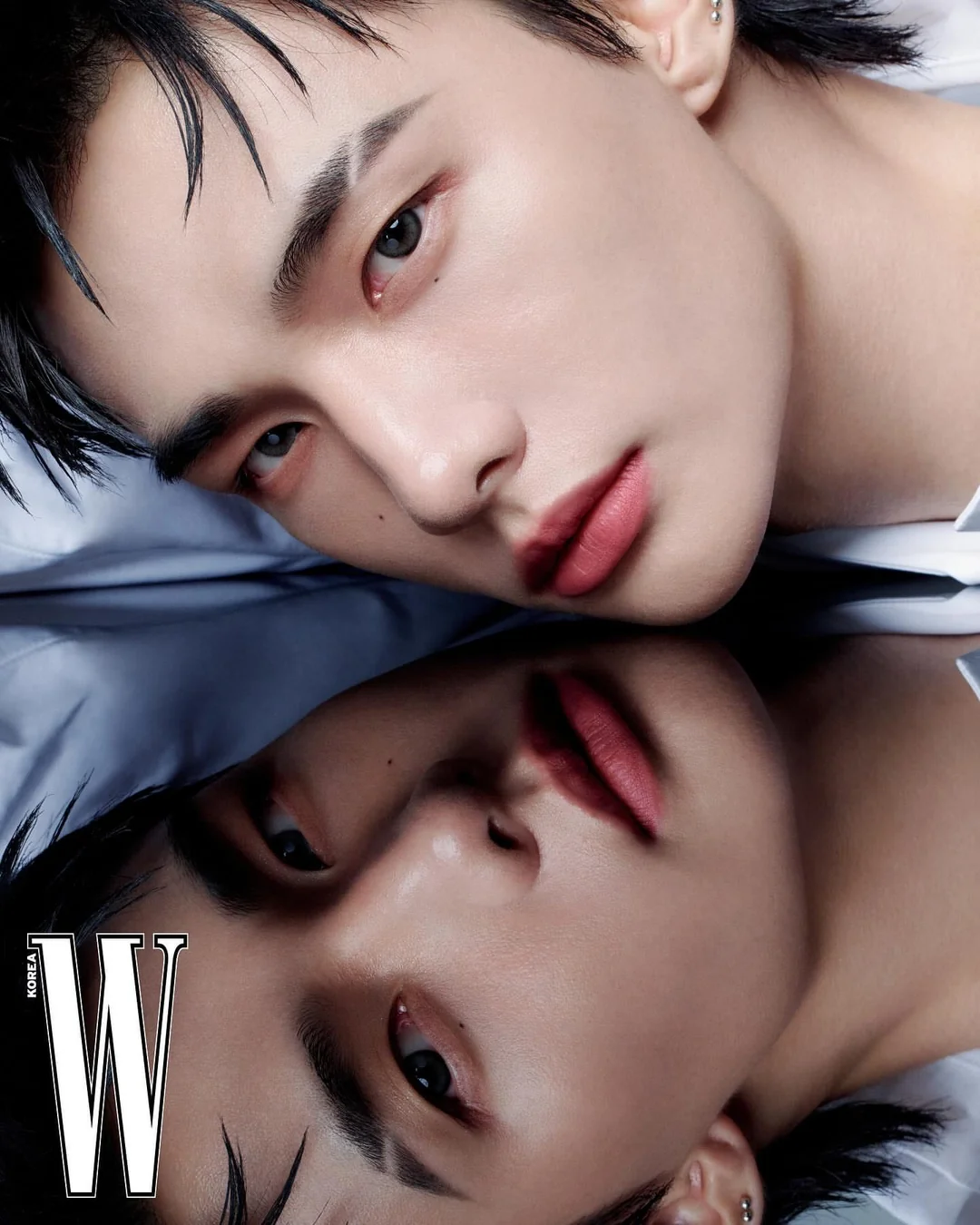
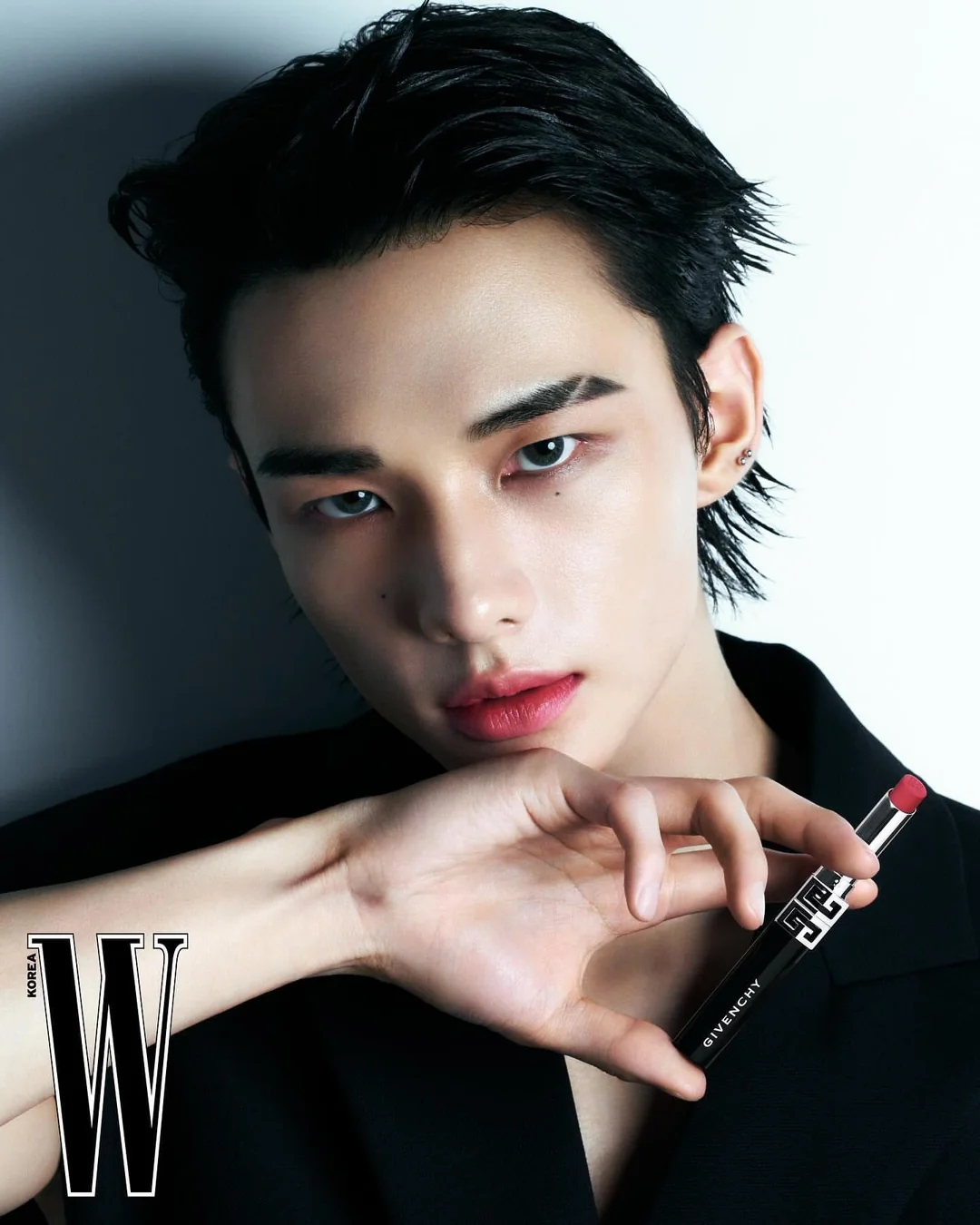
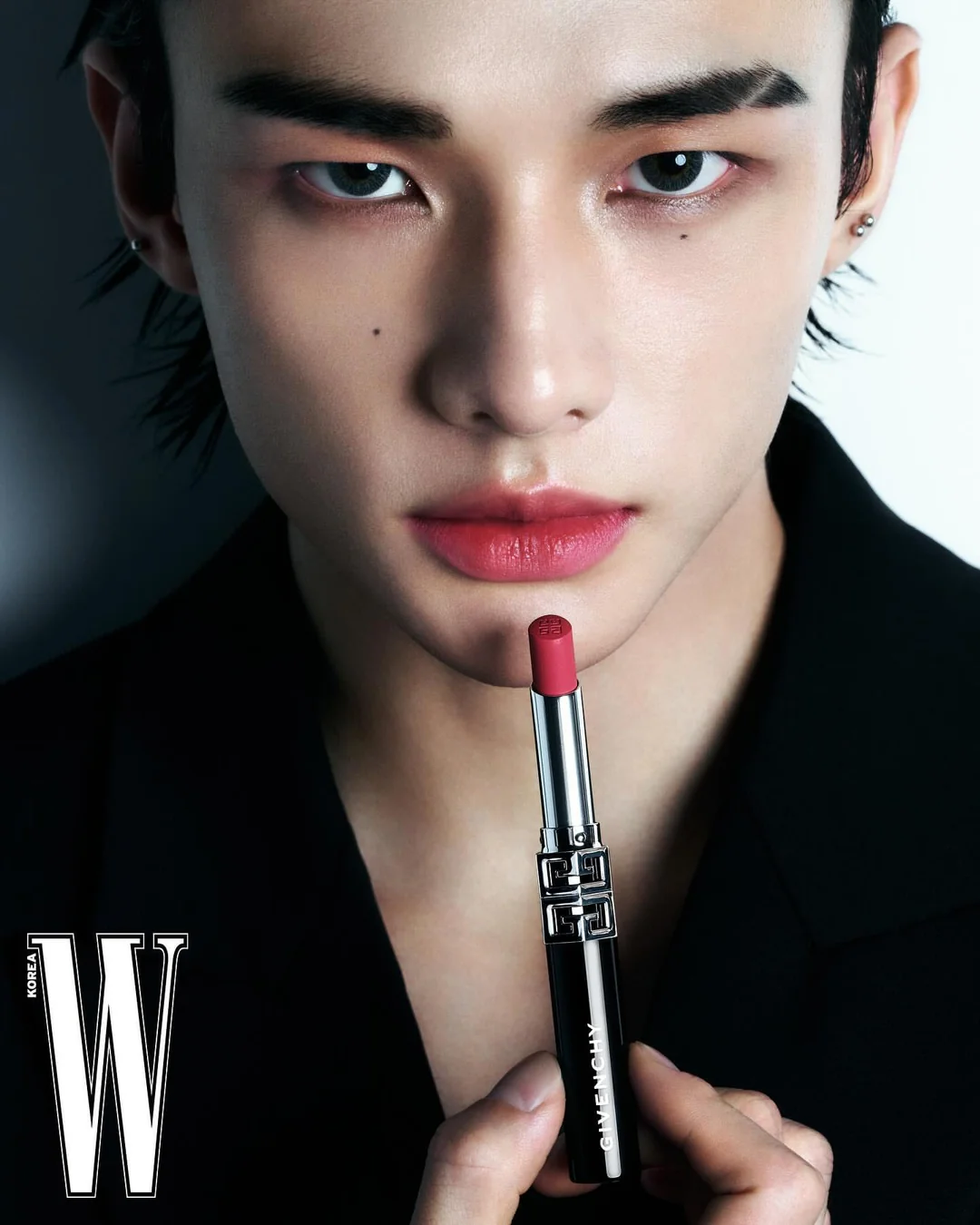
In a luminous fusion of K-pop artistry and Parisian refinement, Stray Kids’ Hyunjin emerged as Givenchy Beauty’s brand ambassador, announced in late 2025 and swiftly becoming a global phenomenon. The fourth-generation idol, renowned for his ethereal visuals, intense gaze, and multifaceted talent as performer, visual artist, and dancer embodies the house’s celebration of bold confidence and poetic self-expression. His campaigns, captured in W Korea pictorials and holiday editions, showcase Hyunjin wielding Le Rouge Velvet Matte Lipsticks in shades No. 4 Nude Rose, P09 Rose Pink, and P227 Rose Red, paired with L’Interdit Parfum. The looks are unapologetically sensual: a clean, sharp buzz-cut frame accentuating flawless skin, bold lips that command attention, and an aura of effortless charisma.
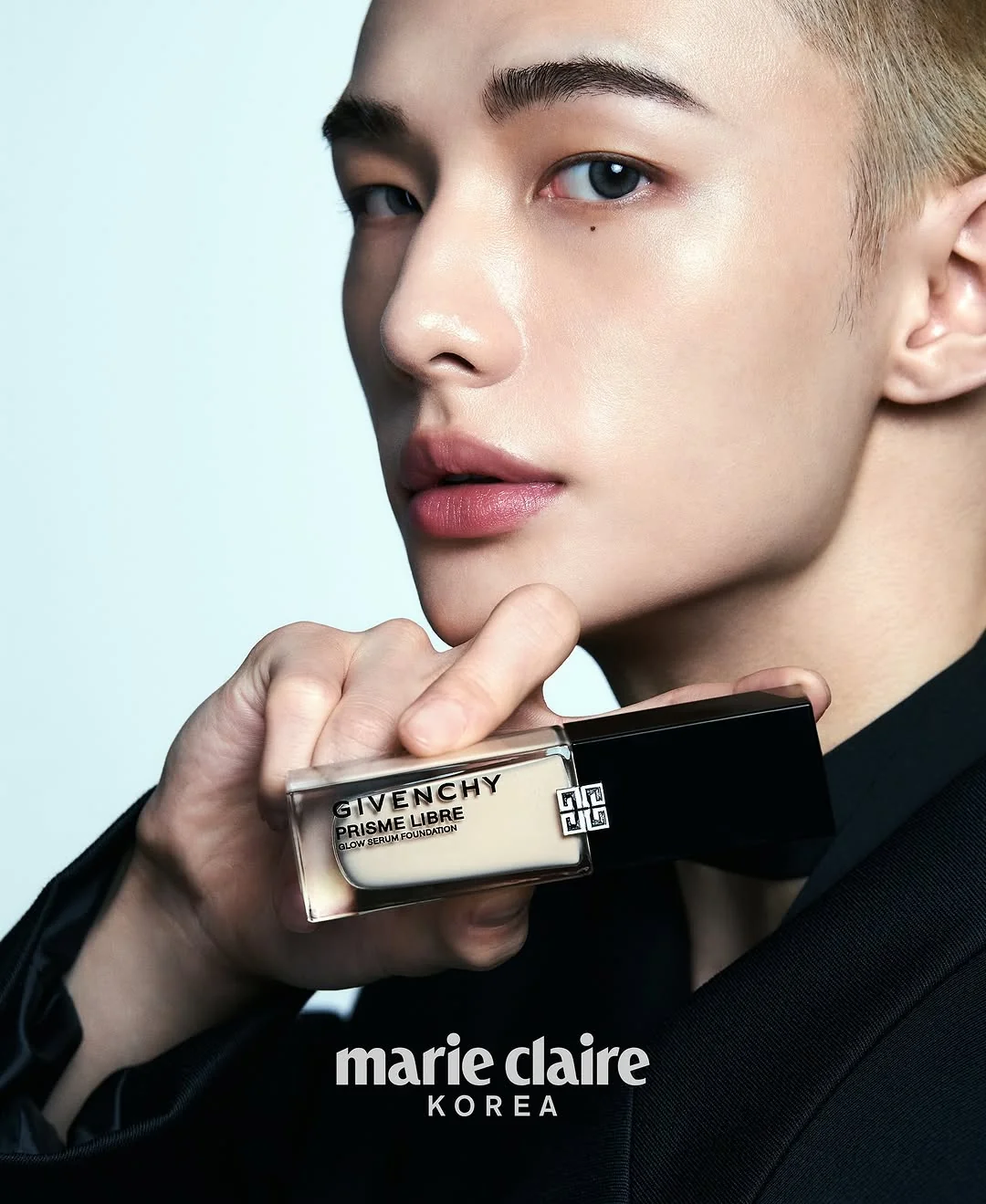
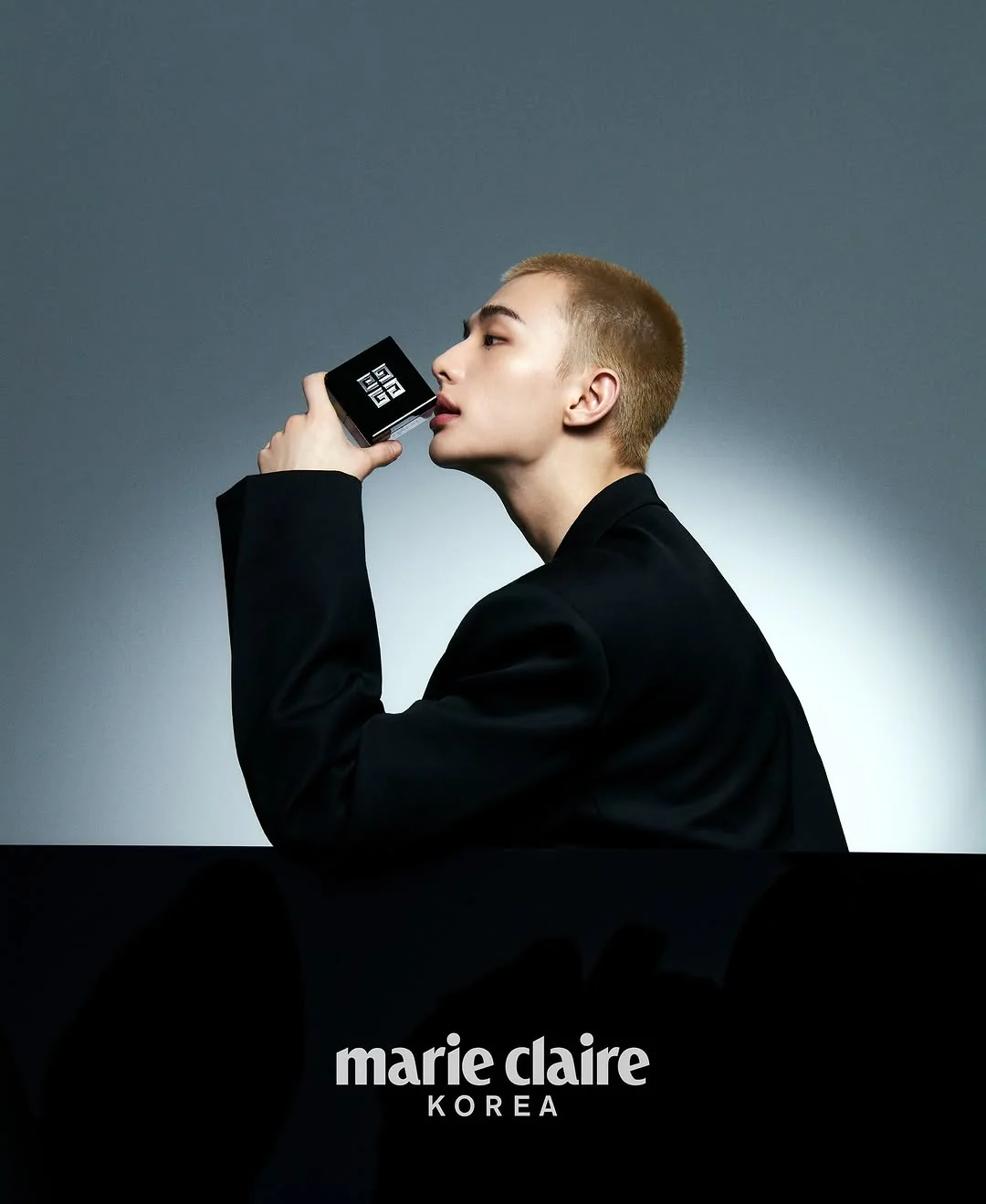
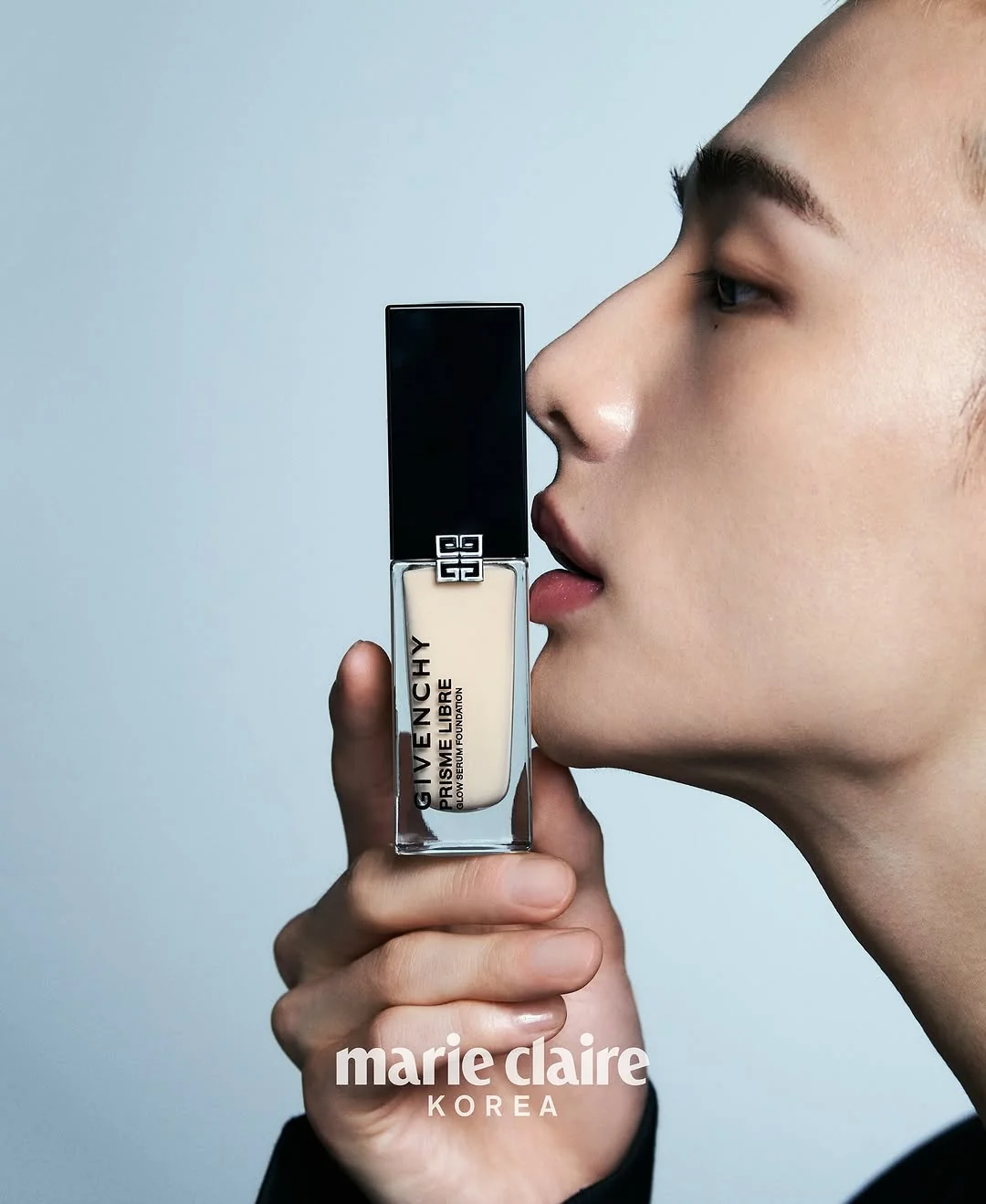
Hyunjin’s gift sets and in-store activations, complete with exclusive photobooks and campaign booklets transform beauty into collectible art. Displayed at Seoul’s Lotte and Shinsegae department stores, his ads radiate a magnetic duality: the softness of rose tones meets the edge of matte velvet, mirroring Givenchy’s own tension between vulnerability and strength. As the only prominent fourth-generation K-pop star to hold such a role at the maison, Hyunjin bridges East and West, youth culture and haute heritage. In one campaign, he unboxes lipsticks with the quiet intensity of a painter revealing his palette; in another, he channels the house’s legacy of forbidden allure, proving that makeup is not adornment but armor (and poetry) for the modern muse. His partnership underscores Givenchy Beauty’s forward momentum: inclusive, artistic, and unafraid to let individuality shine.
Cultural Resonance and Enduring Curiosities
Beyond the catwalk, Givenchy’s influence permeates pop culture and innovation. The maison pioneered the ready-to-wear separates that democratized couture’s language. Hubert’s “no unnecessary detail” philosophy—learned from Balenciaga remains a guiding ethos. Meghan Markle’s wedding dress cemented the house’s royal cachet, while collaborations and limited drops keep its accessories (the Antigona Cube among them) in perpetual demand. Fun footnotes abound: the name is pronounced “Zhee-vahn-shee,” a detail that delights purists; the founder once confessed he never intended a fashion career, drawn instead to the built environment; and L’Interdit’s name itself nods to Hepburn’s playful “forbidden” pact with Givenchy.
Today, under Burton, Givenchy stands not as a relic but a living atelier, its Fall/Winter 2026/27 show in Paris a masterclass in constructed sensuality, its beauty offerings a daily ritual of empowerment. In an era of flux, the maison reminds us that true luxury lies in the details: a perfectly tailored shoulder, a lipstick that lasts through life’s dramas, a silhouette that celebrates every woman’s strength. Givenchy does not merely dress the body; it clothes the spirit. And in that eternal elegance, its future gleams as brightly as its storied past.
Fall/Winter 2025: The Debut – A Return to Silhouette and the Atelier’s Soul
Burton’s inaugural collection for Givenchy, unveiled in March 2025 at the house’s historic Avenue Georges V atelier, was a masterclass in quiet revolution. Presented in a bright, white-painted salon evoking a surgical theater, it stripped fashion back to its essence: pure silhouette, cut, and the intimate bond between designer and wearer. The spark? A cache of Hubert de Givenchy’s original 1952 calico patterns hand-notated and long hidden in the walls of his first atelier during renovations rediscovered just months prior. These artifacts, Burton noted in preview, reconnected her to the founder’s “very stripped back” purity, where “to go forward, you have to go back to the beginning… It’s about silhouette and cut, because the ateliers are amazing here.”
The looks materialized as fetishized objects: dramatic hourglass coats and jackets with spiraling seams tracing the body’s curves; geometric baby dolls; and austere, triangular or square gowns where leather panels descended from the throat like architectural declarations. Tailoring gained a new, sensual attitude bare waists, backs, and legs simmering beneath raw-edged tuxedo jackets and dresses that hinted at construction in progress, as if “being built, and slightly unraveling,” mirroring a world in flux. Bursts of vibrant yellow punctuated the predominantly monochromatic palette, while embellishments remained restrained: giant pearl earrings, feathery mules, delicate wallpaper-floral embroideries, and puffs of tulle. Biker jackets reimagined as hourglass minidresses or cropped with blown-out sleeves added edge, and mesh knits bore ghostly archival watermarks.
It was masterful from the first stitch, peerlessly realized, desirable, and unapologetically sophisticated. Models of diverse ages and sizes walked with quiet pride, embodying Burton’s woman: multifaceted, resilient, and gloriously real. Critics hailed it as a dazzling debut, excising the lingering ghost of Audrey Hepburn’s gamine elegance in favor of a bolder, more constructed femininity. In one fell swoop, Burton reestablished Givenchy’s backbone: not nostalgia, but a living dialogue between heritage and the now.
Spring/Summer 2026: Powerful Femininity . Archetypes, Skin, and the Juxtaposition of Soft and Strong
By October 2025, Burton’s sophomore outing at the Spring/Summer 2026 show staged in an optical white space near the Hôtel des Invalides refined and expanded her vision with luminous confidence. Titled around “powerful femininity,” it peeled back the structural armor of her debut to reveal vulnerability and ease, then layered it anew through the vocabulary of dress and undress. “I wanted to explore the strengths of women through feminine archetypes,” Burton explained. “It started with peeling back the structure of tailoring to reveal skin and a sense of lightness and ease—and then exploring the female vocabulary of dress and undress.”
The runway became a study in equilibrium: masculine precision met unapologetic sensuality on equal footing. A double-breasted black blazer was ripped open at the neck, its pulled-down collar forming a décolleté with a gigot-sleeve hint; a gleaming lipstick-red satin duchesse trench coat cinched with a soft obi, its lapels expanding into a sensual neckline. Leather jackets were sliced along the spine into petal-shaped panels, pushing forward to bare the naked back in erotic revelation. Curves were accentuated everywhere a curvaceous minidress with angular brassiere cups; a crisp white shirt pulled over the shoulder like an impromptu evening dress; a black skirt suit with deep décolleté and thigh-slit skirt; a butter-yellow dress echoing petal motifs at neckline and hem.
No archetype dominated: “I was looking at female power and how to empower women through the archetypes of the feminine,” Burton reflected, rejecting the notion that masculinity alone confers strength. “It’s about embracing femininity, embracing the woman, embracing emotional intelligence… I design for *women*, and I think women, like men, are complex and have lots of different emotions and needs.” The result was ravishingly authentic—studied yet effortless, with fabrics like satin duchesse and leather rendered in precise, minimal gestures. Clients from her debut returned in their trophy pieces, a testament to the collection’s immediate wearability. Here, Burton’s Givenchy woman emerged fully realized: empowered not despite her softness, but through it.
Fall/Winter 2026: “I’m Every Woman” . Multilayered Portraits of Resilience and Reassembly
Presented in March 2026 amid a darkened venue transformed into a cinematic zoetrope its winding runway path heightening surprise and intimacy Burton’s third collection crystallized her vision as a riot of texture, color, and unfiltered humanity. Dubbed “I’m Every Woman” in the collective imagination of critics, it widened the lens to encompass “all those elements of being a woman, and how to navigate that… How do you speak to all those different emotions and different experiences?” As Burton shared backstage: “It’s very personal. In many ways, it’s about how you put yourself back together in a world that’s falling apart.”
Built on the tailoring and silhouette foundations of her first two seasons, the collection turned templates inside out, capturing the spontaneous flow between atelier and client. Menswear fabrics met velvet, animal prints, kimono silks, lace, silver bullion, and wild furry textures in a symphony of contrasts. Opening with Eva Herzigová in a mannish topcoat slipped over a killer tuxedo, the show unfolded in painterly reveries inspired by Northern European Old Masters Flemish flower paintings and Vermeer-like headscarves (twisted silk T-shirts conjured by milliner Stephen Jones after three decades of collaboration). A breathtaking painted, embroidered, shredded, and fringed gown on Mona Tougaard evoked a living Flemish still life; a shaggy shearling coat dyed in leopard spots offered cozy grandeur; black Spencer jackets with pinched waists and peplums delivered immaculate chic.
Seduction threaded through: a knit top spilling pompoms; a dead-simple leather skirt; a velvet slipdress slashed on an angle. Personal talismans abounded a decaying kimono Burton acquired upon arriving in Paris in 2024; a yellow jacquard excavated from McQueen’s Givenchy era. Draped red velvet halter tops paired with baggy pleated trousers; sleeveless black dresses bloomed with colorful poppy embroideries and long silk fringe; off-the-shoulder party dresses in yellow-and-white silk twill jacquard nodded to archival swatches. The hourglass suiting relaxed into varied expressions pinstripes, peplum hips, razor-sharp tuxedos crowned by evening coats while denim workwear and diverse casting (artists, writers, DJs alongside models like Vittoria Ceretti) grounded the grandeur in real life.
It was Burton’s most expressive outing yet: a riot of embellishment and trend-forward gestures (animal prints, extreme fringe, bows) that felt simultaneously timely and timeless. Front rows buzzed with Diane Kruger, Yseult, Rooney Mara, and more, while reviews proclaimed it her best confident, sensual, assured, with “no notes.” In layering comfort (a blue shearling coat cinched like a dressing gown) with seduction and spectacle, Burton captured the fragmented poetry of modern existence: memory, history, and resilience woven into every seam.
Through these collections, Sarah Burton has not merely dressed Givenchy anew, she has reanimated its soul. Each season deepens the maison’s dialogue with women who refuse singularity, embracing instead the beautiful chaos of multiplicity. As she orchestrates velvet and tailoring, florals and fringe, Burton reminds us that true couture is not imposition but empowerment: a wardrobe for putting ourselves back together, one exquisite piece at a time. In her hands, Givenchy’s future gleams with the quiet fire of authentic femininity timeless, yet utterly of the moment.
Final Word: Precision is Power
Givenchy has never needed to be loud. Its strength lies in control. In detail. In knowing exactly what it is.
From Audrey Hepburn to Hyunjin, the message remains the same:
Elegance evolves, but it never disappears.
And right now, Givenchy isn’t just evolving.
It’s aligning with culture, with youth, and with the future of fashion.
All images featured in this article are credited to owners . They are used for editorial and illustrative purposes only, with no commercial intent. All rights remain with their respective owners.


