%20(1).png)
The PRADA Paradox: A Manifesto on Intellectual Subversion
- 12 abr
- 4 min de lectura
In the high-octane world of luxury fashion, where trends are often born and discarded with the swipe of a thumb, Prada remains an anomaly. It is a house that does not merely design clothing; it constructs intellectual puzzles. While other legacy brands lean into the comfort of their archives, Prada—under the singular guidance of Miuccia Prada and now in partnership with Raf Simons—continues to interrogate the very definition of "chic".
This is an exploration of the Milanese powerhouse that turned "ugly" into an aspiration and utility into a status symbol.
From Galleria Vittorio Emanuele II to Global Vanguard
The Prada story began in 1913, when Mario Prada opened a refined leather goods shop in Milan’s prestigious Galleria. For decades, it was a bastion of traditional craftsmanship. However, the brand’s metamorphosis into a global cultural titan was not a linear progression; it was a revolution led by Miuccia Prada upon her arrival in the late 1970s.
Miuccia, a woman with a PhD in political science and a background in mime, did not approach fashion as a decorator, but as a disruptor. She transformed a heritage company into a medium for social and aesthetic commentary, ensuring that every collection since has been a reflection of the zeitgeist—often before the zeitgeist even realizes it has arrived.
The Philosophy of "Ugly-Chic": Challenging the Gaze
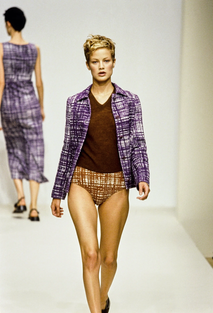
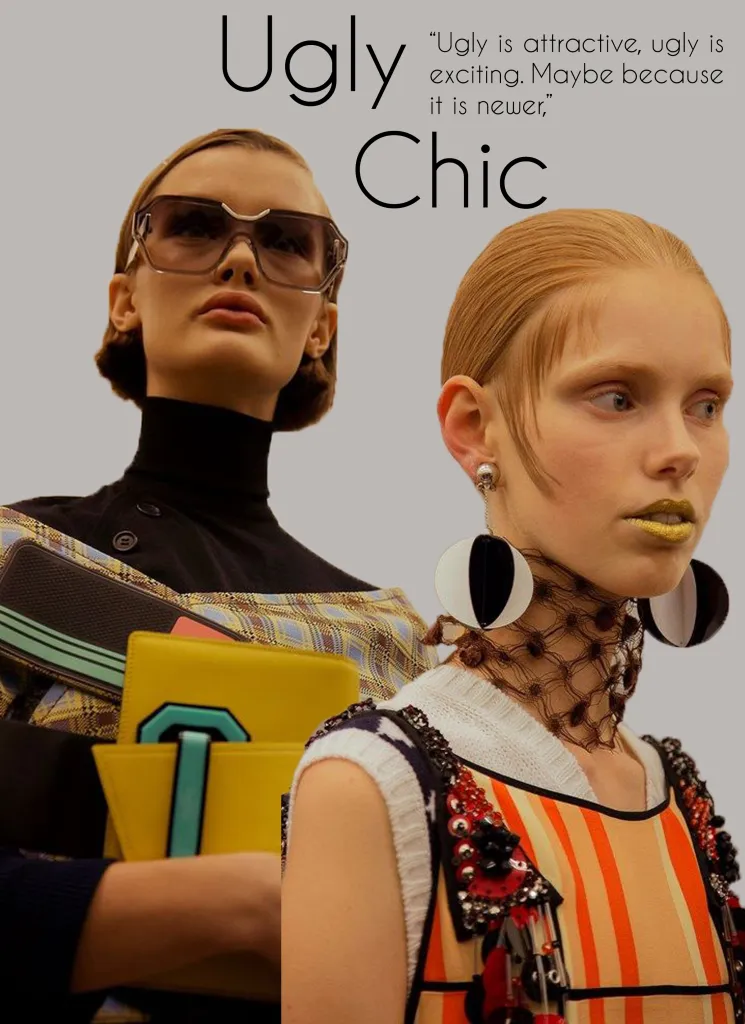
Prada’s most enduring contribution to the fashion lexicon is the concept of "ugly-chic." This isn't about a lack of beauty, but rather a challenge to traditional, often patriarchal, standards of elegance.
The Prada woman—and now the Prada man—embraces a design language where "awkward" silhouettes feel deliberate and "clashing" patterns feel harmonious. By intentionally layering meaning through references to politics, gender roles, and social uniforms, the house turns clothing into a form of high-level discourse. It is fashion for the thinking person—those who find complexity more seductive than simplicity.


The Power of Material: The Nylon Revolution and Re-Nylon
Perhaps the most radical move in the history of modern luxury was Prada’s decision to elevate industrial nylon. In the mid-80s, the introduction of the Vela backpack signaled a seismic shift: functionality was no longer the enemy of luxury; it was its new frontier.
By utilizing Pocono nylon—a material previously reserved for military tents—Prada deconstructed the hierarchy of fabrics. Today, this legacy continues through the Re-Nylon initiative. (Note: While the sources mention the use of industrial nylon and its role in redefining luxury, the specific "Re-Nylon" sustainability program is a widely known industry fact that complements the source's narrative on how these materials remain "recognisable, but never static").
A Creative Convergence: The Miuccia and Raf Dialogue
The appointment of Raf Simons as co-creative director marked a historic moment in fashion: two of the industry’s most respected minds operating as equals. This partnership has moved the brand away from a singular vision toward a "layered" dialogue between generations and aesthetics.
In their joint collections, we see a fascinating tension:
Precision Tailoring: Silhouettes that are impeccably sharp yet intentionally "off-balance".
Contradictory Textures: The juxtaposition of heritage textiles with hyper-modern technical materials.
Austerity vs. Embellishment: A strict, almost monastic minimalism that suddenly gives way to explosions of print or texture.
Cultural Infrastructure: Fondazione Prada and the Cinematic Lens
Prada’s influence is not contained within the four walls of a boutique. Through Fondazione Prada, the house has established itself as a rigorous patron of contemporary art, architecture, and cinema. This isn't "branding"; it is a platform for culture that reinforces Prada’s position as an intellectual leader rather than just a garment manufacturer.
This cultural weight is mirrored in how the brand is perceived in popular media. The seminal film The Devil Wears Prada did more than just use the brand’s name; it captured the cold, commanding authority of an industry built on precision and sacrifice.
Meryl Streep’s iconic portrayal of Miranda Priestly remains a cultural touchstone for fashion’s power structures. As the industry anticipates a sequel, the conversation shifts to how luxury must now navigate a digital, globalized landscape, a challenge Prada has met by treating fashion as a continuous cultural narrative. The upcoming release of The Devil Wears Prada 2 has quietly become one of the most talked-about moments in both film and fashion circles. Arriving nearly twenty years after the original, the sequel returns to a world that has shifted dramatically, from print-heavy editorial culture to a fast, digital-first industry shaped by global influence and social media.
Rather than simply revisiting nostalgia, the new chapter is expected to reflect how fashion now operates as a constant public conversation, where image, power, and perception move faster than ever.
The New Guard: Global Ambassadors and Digital Dialogue
In recent years, Prada has masterfully recalibrated its communication strategy. Moving away from traditional luxury hierarchies, the brand has embraced a cultural dialogue with a younger, digitally native audience.







This is most evident in their strategic relationship with the K-pop industry. Global ambassadors like Jaehyun and Karina and collabs with others kpop idols, actors etc... are not just faces for the brand; they represent a "diverse and globally aware" identity that resonates with a new generation of consumers. This shift proves that Prada’s intellectualism is not exclusionary; it is a global conversation.
The Final Word: The Art of Evolution
The enduring power of Prada lies in its refusal to offer easy answers. In an era of "fast fashion" and instant gratification, Prada demands a slower, more considered engagement. Its collections are designed to be revisited, reinterpreted, and refined over time.
Prada remains the ultimate proof that fashion, when approached with intellectual rigor and a willingness to embrace contradiction, can be one of the most potent forms of art in the modern world.
All images featured in this article are credited to owners . They are used for editorial and illustrative purposes only, with no commercial intent. All rights remain with their respective owners.


