%20(1).png)
KENZO: From Japan To Paris
- 1 jun
- 8 min de lectura
How Kenzo Takada transformed fashion through colour, joy and cultural fusion, and created one of the most influential luxury brands of the modern era.
Fashion history is often told through the stories of revolutionaries. Coco Chanel liberated women from corsets. Christian Dior restored glamour after war. Yves Saint Laurent introduced ready-to-wear luxury. Cristóbal Balenciaga reinvented silhouette.
But few designers changed the cultural geography of fashion quite like Kenzo Takada.
Long before diversity became a corporate buzzword and decades before luxury brands began competing for Asian ambassadors, Kenzo was already building a global vision of fashion. He mixed Japanese aesthetics with Parisian craftsmanship, borrowed inspiration from cultures around the world and rejected the rigid codes that dominated European luxury. His runways felt more like celebrations than fashion shows. His clothes embraced freedom rather than formality. And his success opened doors for generations of designers who would follow.
Today, Kenzo occupies a unique place within fashion history. It is simultaneously a heritage house, a streetwear player, a luxury fragrance powerhouse and a symbol of cultural exchange. Yet behind the tiger motifs, celebrity campaigns and LVMH ownership lies a deeply human story about ambition, migration and creativity.
It is the story of a young man from provincial Japan who boarded a ship for Europe and ended up changing fashion forever.
THE BOY FROM HIMEJI
Kenzo Takada was born in 1939 in Himeji, a city in Japan's Hyōgo Prefecture best known for its spectacular feudal castle. He grew up in a traditional family where fashion was not considered a realistic career path, particularly for a young man.
From an early age, however, Kenzo was captivated by clothing. While other children focused on sports or academics, he spent hours sketching garments inspired by fashion magazines. He became fascinated by silhouettes, fabrics and the transformative power of style.
At the time, Japan's fashion industry was still relatively conservative. Design education largely catered to women, and men rarely pursued careers in fashion. Nevertheless, Kenzo remained determined.
His persistence eventually led him to Bunka Fashion College in Tokyo, one of the most influential fashion schools in the world. The institution would later produce names such as Yohji Yamamoto, Junya Watanabe and other major Japanese designers, but when Kenzo enrolled, male students were still a rarity.
The decision would prove life-changing.
At Bunka, he developed the technical skills that would form the foundation of his career while simultaneously nurturing a creative philosophy that challenged convention. He was less interested in strict tailoring than in movement, colour and emotion.
Fashion, in his eyes, should make people feel alive
.
THE JOURNEY THAT CHANGED EVERYTHING
The defining moment of Kenzo's life arrived in the mid-1960s.
As Tokyo prepared for modernization and urban redevelopment ahead of the Olympic Games, many buildings, including the apartment where Kenzo lived, were scheduled for demolition. The compensation he received unexpectedly provided the means to pursue a dream that had long seemed impossible.
Europe.
In 1965, Kenzo embarked on a months-long journey by ship to France.
The voyage itself became part of his mythology. Unlike today's designers who can board a flight and arrive in Paris within hours, Kenzo crossed continents and oceans, observing different cultures along the way. He visited cities across Asia and the Middle East before eventually reaching France.
When he arrived in Paris, he entered a fashion world dominated by established European maisons. Dior, Givenchy, Balmain and Yves Saint Laurent represented an industry that was prestigious but often rigid.
Kenzo stood apart immediately.
He was young, foreign and largely unknown.
Yet those qualities would become his greatest strengths.
JUNGLE JAP AND THE BIRTH OF A NEW FASHION LANGUAGE
In 1970, Kenzo opened his first boutique in Paris.
The store was called Jungle Jap.
At the time, the name reflected his fascination with travel, cultural mixing and exoticism. The boutique itself embodied this spirit. Kenzo painted the interior himself, covering the walls with lush botanical motifs inspired by Henri Rousseau's jungle paintings.
The store looked nothing like the polished luxury boutiques of Paris.
It was vibrant, chaotic and alive.


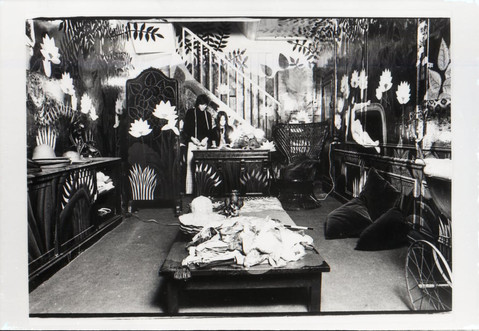
The clothes were equally unconventional.
Instead of focusing on the restrained elegance associated with French fashion, Kenzo embraced bold prints, oversized silhouettes and unexpected combinations of colours and patterns. His garments often drew inspiration from Japanese kimonos, folk costumes, military uniforms and global textile traditions.
Fashion journalists quickly took notice.
By the early 1970s, Kenzo had become one of the most exciting new voices in Paris.
The name Jungle Jap would later become controversial due to changing cultural sensitivities surrounding the term. Eventually, the brand adopted the simpler and more internationally accessible name: Kenzo.
Yet the spirit remained unchanged.
Kenzo was never interested in fitting neatly into one category.
WHEN PARIS FELL IN LOVE WITH KENZO
The 1970s and 1980s saw Kenzo emerge as one of the defining designers of his generation.
While many luxury houses projected exclusivity and formality, Kenzo offered something refreshingly different.
Joy.
His collections exploded with colour. Floral prints appeared alongside stripes, plaids mixed with embroidery and seemingly clashing references somehow formed harmonious compositions.
Fashion critics frequently described his work as optimistic.
That optimism became his signature.
In an era increasingly obsessed with status and power dressing, Kenzo celebrated individuality. His designs encouraged self-expression rather than conformity.
This approach resonated with a growing international audience.
By the 1980s, Kenzo had expanded beyond womenswear into menswear, accessories and fragrance. His influence extended far beyond Paris, helping establish Japanese designers as major forces within global fashion.
Without Kenzo's success, it is difficult to imagine the pathways later navigated by Yohji Yamamoto, Rei Kawakubo or Issey Miyake.
He proved that a Japanese designer could not only succeed in Paris but fundamentally reshape its creative landscape.
THE RUNWAYS THAT FELT LIKE PARTIES
Perhaps more than any designer of his era, Kenzo understood the emotional power of spectacle.
His fashion shows became legendary.
At a time when many runway presentations remained formal affairs attended by editors and buyers, Kenzo transformed them into celebrations. Models smiled, danced and interacted with audiences. Music played a central role. Unexpected performances frequently accompanied the collections.
One particularly famous show took place in a circus tent.
Another featured dramatic theatrical elements that blurred the line between fashion presentation and performance art.
The atmosphere reflected Kenzo himself: energetic, curious and deeply optimistic.
Fashion was not something to be feared or worshipped.
It was something to be enjoyed.
That philosophy continues to influence modern runway culture today.
THE LVMH ERA
In 1993, Kenzo sold his company to LVMH.
The acquisition marked a significant milestone both for the designer and for the luxury industry as a whole.
LVMH recognized the value of Kenzo's unique identity and global appeal. The purchase also reflected a broader trend in luxury fashion, as conglomerates began acquiring independent houses to build international portfolios.
Although Kenzo remained involved creatively for several years, the sale inevitably marked the beginning of a new chapter.
The founder eventually stepped away from the brand bearing his name.
Yet his influence remained deeply embedded in its DNA.
THE PERFUMES THAT CONQUERED THE WORLD
While fashion enthusiasts often focus on runway collections, Kenzo's fragrance business became one of the most important pillars of the brand.
No product illustrates this success better than Flower by Kenzo, launched in 2000.
The fragrance quickly became iconic thanks to its distinctive red poppy imagery. The flower itself was chosen because poppies can grow even in urban environments, symbolizing beauty, resilience and hope.
The campaign became instantly recognizable.


Over time, Flower by Kenzo evolved into one of the most successful fragrance franchises in luxury beauty.
The house also achieved considerable success with Kenzo Homme, whose aquatic and woody compositions helped define men's fragrance trends during the 1990s and beyond.
These perfumes introduced the Kenzo universe to consumers who might never purchase a runway garment but could still participate in the brand's dream.
THE LEGACY OF KENZO TAKADA
After leaving the fashion house, Kenzo remained creatively active.
He explored interior design, lifestyle projects and artistic collaborations. Unlike many retired designers who disappear from public life, he continued to create while maintaining the warmth and curiosity that had always defined his personality.
Then came 2020.
The fashion world was shocked by the news that Kenzo Takada had passed away in Paris following complications related to COVID-19.
He was 81 years old.
Tributes poured in from across the industry. Designers, models, editors and celebrities remembered not only his extraordinary talent but also his kindness.
That distinction mattered.
Fashion has produced many geniuses.
Far fewer are remembered as universally beloved human beings.
Kenzo was one of them.
THE TIGER THAT TOOK OVER THE INTERNET
By the early 2010s, Kenzo faced a challenge shared by many heritage brands.
How could it remain relevant for a younger generation?
The answer arrived through Humberto Leon and Carol Lim, founders of Opening Ceremony, who were appointed creative directors in 2011.
Their tenure brought renewed energy to the house.
Most importantly, it produced one of the defining luxury products of the decade: the Tiger Sweatshirt.
Featuring an embroidered tiger motif inspired by archival Kenzo imagery, the sweatshirt became a global phenomenon. Celebrities, influencers, musicians and fashion enthusiasts embraced the design.
The tiger appeared everywhere.
What might seem commonplace today was revolutionary at the time. Long before luxury streetwear became industry standard, Kenzo demonstrated that a simple graphic sweatshirt could achieve the same cultural impact as a handbag or couture dress.
The tiger helped reintroduce Kenzo to an entirely new audience.
ENTER NIGO: A NEW CHAPTER
In 2021, LVMH appointed Nigo as artistic director.
The decision was historic.
Nigo was already one of the most influential figures in contemporary fashion. As the founder of A Bathing Ape (BAPE) and a pioneer of Japanese streetwear, he possessed enormous cultural credibility.
Perhaps most importantly, he became the first Japanese designer to lead Kenzo since the departure of its founder.
The symbolism was powerful.
Nigo approached the house with deep respect for Kenzo Takada's legacy while introducing contemporary references drawn from streetwear, music and youth culture.
His collections frequently explored the dialogue between East and West that had defined the brand since its inception.
KENZO, CELEBRITIES AND THE K-POP GENERATION
Like many luxury brands, Kenzo increasingly embraced Asian entertainment culture during the 2020s.
The house developed strong relationships with musicians, actors and global ambassadors whose influence extended far beyond fashion.
KENZO announced VERNON, member of K-pop boyband SEVENTEEN, as its global ambassador.

Nigo's background naturally strengthened connections between Kenzo and contemporary youth culture.
Artists from Korea, Japan, China and Southeast Asia became increasingly visible within the brand's ecosystem.
"Real-to-Be" Asia-Wide Campaign (2022)
To align with the brand’s cross-cultural, streetwear-meets-heritage identity, KENZO also partnered with eight notable Asian musicians for its regional campaigns, including:
James Reid (Philippines)
BIBI (South Korea)
Afgan (Indonesia)
Erik (Vietnam)
Julia Wu (Taiwan)
Tyson Yoshi (Hong Kong)
Jaylerr (Thailand)
Aisyah Aziz (Singapore)
WHY KENZO STILL MATTERS
Fashion history often celebrates rebellion.
Kenzo's achievement was different.
He proved that optimism could be revolutionary.
At a time when Paris largely dictated the rules of luxury, he introduced a new visual language built on multiculturalism, colour and freedom. He opened doors for designers from outside Europe, challenged assumptions about elegance and demonstrated that creativity thrives when cultures interact rather than compete.
The influence of Kenzo Takada extends far beyond the garments that carried his name.
It can be seen in the global nature of modern fashion, in the industry's embrace of Asian creativity and in the growing recognition that luxury need not be restrained to be sophisticated.
More than fifty years after opening his first boutique in Paris, his message feels remarkably contemporary.
Fashion is richer when it welcomes different voices.
Few designers embodied that idea more beautifully than Kenzo Takada.
And few brands continue to tell that story as powerfully as Kenzo.


