%20(1).png)
FASHION ENTERS THE GAME: Luxury Brands And The Gaming Universe
- 21 may
- 5 min de lectura
Actualizado: 27 may
From Louis Vuitton x League of Legends to Balenciaga’s Fortnite takeover, Prada’s Final Fantasy era and why gaming became fashion’s new front row
For decades, luxury fashion and gaming existed in completely different worlds.
One represented:
couture ateliers
Paris salons
exclusivity
craftsmanship
The other was associated with:
internet culture
teenage bedrooms
online avatars
esports arenas


RAZER X Dolce&Gabbana 2023 Collab
And yet somehow, by the late 2010s, these two industries collided , creating one of the most fascinating cultural shifts modern fashion has ever seen.
Today, gaming is no longer considered “outside” luxury culture.
It is luxury culture.
Fashion houses now compete for visibility inside:
video games
esports tournaments
virtual worlds
avatar customization ecosystems
because they understand something crucial:
Gen Z often spends more time building digital identity than physical identity.
And luxury brands noticed.
LOUIS VUITTON x FINAL FANTASY: THE COLLABORATION THAT CHANGED EVERYTHING
Before gaming collaborations became mainstream, Louis Vuitton quietly made fashion history in 2015.
Under Nicolas Ghesquière, the house cast:
Lightning
the protagonist from Final Fantasy XIII,as the face of its Spring/Summer 2016 campaign.
At the time, the decision shocked both:
luxury fashion audiences
gaming communities
Because Lightning was not ,a celebrity, a supermodel, a musician.
She was entirely digital.
Photographed wearing Vuitton pieces and carrying monogram bags, the campaign blurred the line between reality and fantasy





Years later, the campaign feels almost prophetic.
Long before the metaverse became a corporate obsession, Louis Vuitton already understood:👉 digital characters could become fashion icons.
And importantly:this was a real official campaign ( not AI art, not fan edits, not internet speculation)
PRADA x FINAL FANTASY: THE EARLY EXPERIMENT
Even before Vuitton, Prada experimented with gaming imagery connected to Final Fantasy.
During the early 2010s, luxury fashion increasingly explored:
CGI aesthetics
virtual models
gaming-inspired visuals as fashion photography itself became more digitally manipulated.



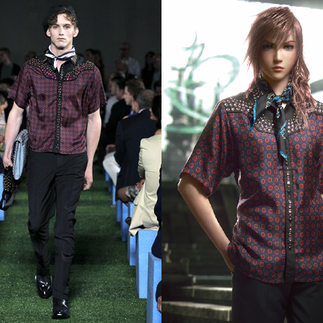
While Prada’s connection was less commercially explosive than Vuitton’s, it marked one of the earliest moments where gaming characters entered high-fashion visual language.
LOUIS VUITTON x LEAGUE OF LEGENDS: THE MOMENT LUXURY TOOK ESPORTS SERIOUSLY
Then came the collaboration that changed everything.
In 2019, Louis Vuitton partnered with:
League of Legends through Riot Games.
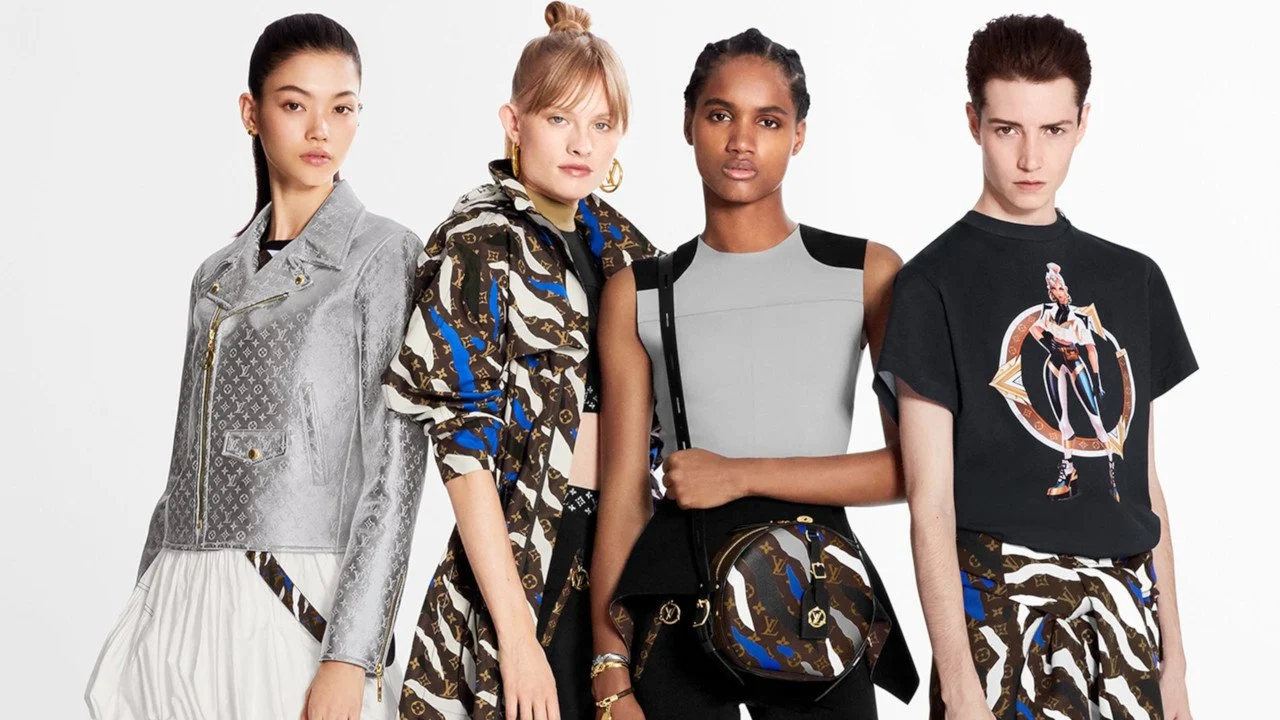


And suddenly:fashion was no longer simply referencing gaming.
It was entering gaming directly.
The partnership included:
official championship trophy trunks
in-game skins designed by Nicolas Ghesquière
physical capsule collections
esports branding integration
The collaboration became historic because it was the first time a major luxury house truly embedded itself into competitive gaming culture.
THE TROPHY TRUNK THAT BECAME A CULTURAL MOMENT
Louis Vuitton designed a custom trunk for the:
Summoner’s Cup the championship trophy for the League of Legends World Championship.

The trunk transformed esports into something visually comparable to:
Formula 1
FIFA
the Olympics
For the first time:gaming trophies were presented with the same ceremonial luxury language as traditional elite sports.
Fashion insiders realized immediately:this was not a gimmick.
It was strategy.
THE LV SKINS: WHEN AVATARS WORE COUTURE
Perhaps the most revolutionary aspect of the partnership was:
digital Louis Vuitton skins.
Champions Qiyana and Senna received exclusive Vuitton-designed in-game looks.


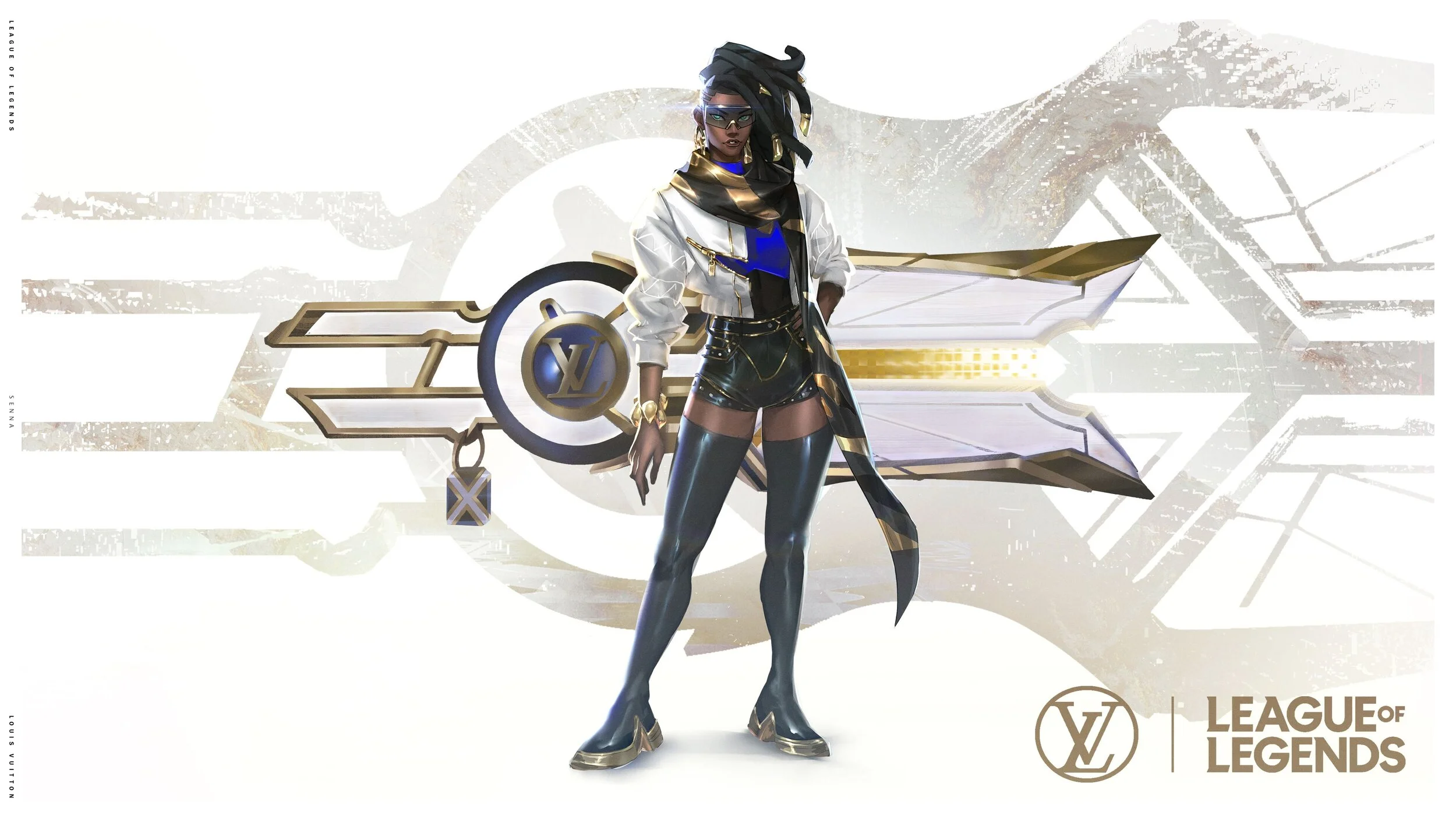
This changed fashion marketing permanently because:players were not simply looking at fashion anymore.
They were wearing it digitally.
And in many ways,that became more emotionally powerful than physical clothing.
WHY FASHION BECAME OBSESSED WITH GAMING
Luxury brands eventually realized gaming audiences offered:
massive global reach
younger demographics
intense community loyalty
digital identity consumption
According to multiple industry reports, gaming audiences surpassed 3 billion users globally.
Fashion understood quickly: future luxury consumers were already spending money on:
skins
customization
virtual exclusivity
digital aesthetics
Which sounds surprisingly similar to fashion itself.
BALENCIAGA x FORTNITE: THE METAVERSE ERA ARRIVES
In 2021, Balenciaga became the first major luxury house to fully enter:
Fortnite.
The collaboration included:
digital Balenciaga skins
virtual accessories
in-game branded environments
physical Balenciaga x Fortnite clothing
Suddenly :players could wear Balenciaga both online and in real life.
The campaign became one of the clearest examples of:
“phygital fashion”
(physical + digital fashion ecosystems).
And aesthetically,it made perfect sense.
GUCCI: THE BRAND THAT UNDERSTOOD DIGITAL FASHION FIRST
While Louis Vuitton entered esports and Balenciaga entered Fortnite, Gucci focused on building an entire gaming ecosystem.
The brand collaborated with:
Roblox
Zepeto
Pokémon GO
The Sims


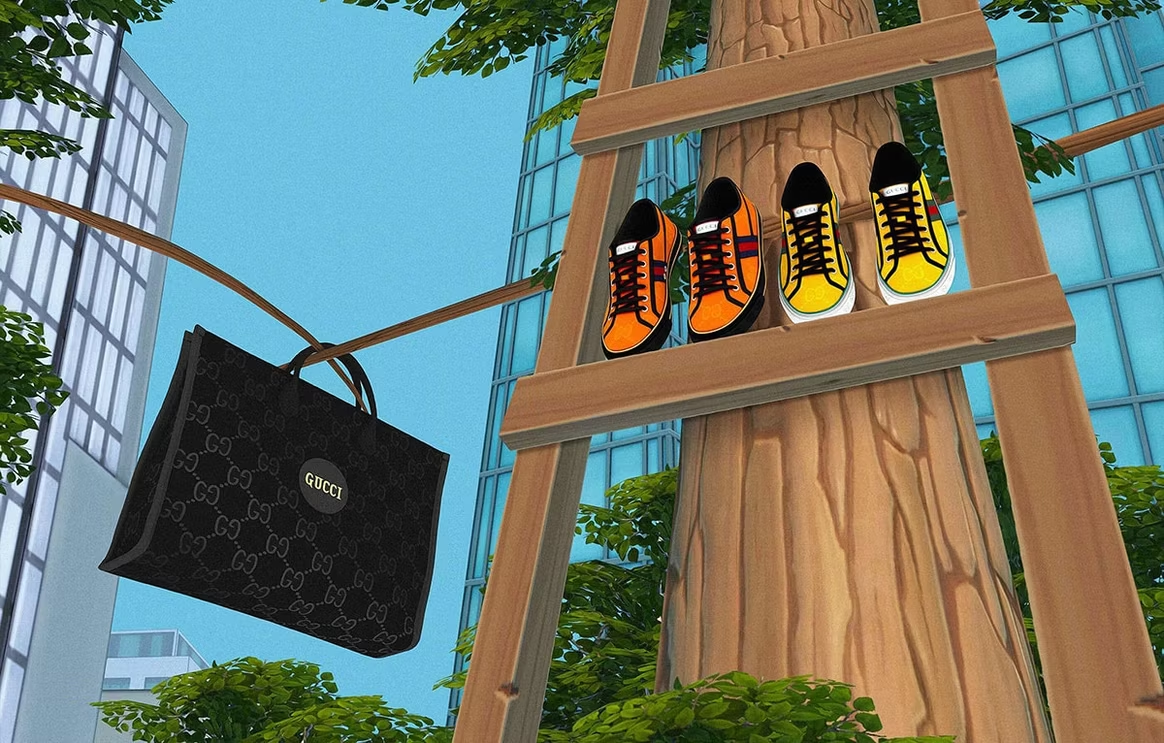
and even launched:
Gucci Gaming Academy supporting esports players professionally.
Rather than treating gaming as a temporary trend, Gucci approached it as:
cultural infrastructure
digital community-building
long-term Gen Z engagement strategy
The brand understood that modern luxury increasingly exists inside online identity, not just boutiques.
MOSCHINO x SUPER MARIO: WHEN POP CULTURE BECAME LUXURY
Before the metaverse era exploded, Moschino collaborated with:
Nintendo’s Super Mario Bros.
The collection included:
graphic sweaters
leather bags
cartoon motifs
gaming iconography





Jeremy Scott transformed nostalgic gaming visuals into luxury pop fashion.
At the time, critics considered it playful. Today, it looks like an early blueprint for fashion’s gaming obsession.
DIESEL x DEVIL MAY CRY: THE FORGOTTEN EARLY COLLAB
One of the earliest real gaming-fashion collaborations came from:Diesel and Devil May Cry 2.
Diesel designed alternate costumes for characters Dante and Lucia during the early 2000s.


Years before luxury gaming became mainstream, brands were already experimenting with digital styling inside games.
Most people simply were not paying attention yet.
WHY GAMING AND FASHION ACTUALLY MAKE PERFECT SENSE
At first glance:luxury fashion and gaming seem incompatible.
But psychologically,they function almost identically.
Both industries revolve around:
identity creation
status signaling
aesthetics
exclusivity
customization
fantasy projection
A rare in-game skin functions surprisingly similarly to a Birkin bag, limited sneakers and runway exclusives
Gaming simply digitized luxury behavior.
THE RISE OF DIGITAL STATUS SYMBOLS
Modern consumers increasingly flex:
Fortnite skins
rare game cosmetics
avatar accessories
digital collectibles
the same way previous generations flexed watches, handbags and logos.
Luxury brands realized:digital identity now holds real emotional and cultural value.
And once they understood that,gaming stopped being “nerdy.”
It became commercially essential.
THE KOREAN CONNECTION: WHY K-GAMING CULTURE ACCELERATED EVERYTHING
Asian gaming culture , especially in South Korea, China and Japan
played a massive role in legitimizing luxury gaming collaborations.-
Esports athletes became celebrities.Gaming cafés became cultural hubs. Digital fashion became normalized much earlier than in the West.
And importantly:many K-pop idols themselves are gamers.
This created an ecosystem where luxury, gaming, music and internet aesthetics naturally overlapped.
FASHION IS NO LONGER JUST PHYSICAL
The most important thing these collaborations revealed is simple:
Fashion no longer exists only on the body.
It exists:
on screens
in games
through avatars
across virtual identity systems
The runway is no longer the only stage that matters. Sometimes,it’s a multiplayer server.
FINAL THOUGHT
For years, luxury fashion underestimated gaming culture.
Now,it depends on it. Because gaming did something fashion has always tried to achieve:
it created worlds people emotionally wanted to live inside.
And once luxury brands understood that,the collaboration stopped being surprising.
It became inevitable.
All images featured in this article are credited to owners . They are used for editorial and illustrative purposes only, with no commercial intent. All rights remain with their respective owners.


